Collagen production drops 30% in the first five years of menopause[30]. Decreasing estrogen levels cause this dramatic decline and explain many noticeable menopause skin changes, such as extreme dryness and wrinkles. Understanding collagen loss and menopause can help you address these skin changes.
Understanding Menopause Skin Changes
What Happens to Your Skin During Perimenopause?
Your skin contains estrogen receptors that make it especially responsive to hormonal changes. These receptors appear throughout your skin. Your face, genital region, and legs have the highest concentration. Estrogen levels begin their decline during perimenopause, usually two to eight years before menopause. Your skin registers these changes right away. Skin issues affect nearly half of women navigating this transition.
Your estrogen levels fluctuate widely during perimenopause rather than dropping steadily. These unpredictable swings create skin symptoms that may come and go. This makes it harder to identify the cause at first. You might experience occasional dryness one week, then breakouts the next. Your skin’s barrier weakens during this phase. The pH level of your skin changes around age 50 and makes you more prone to rashes and irritation[13].
Visible Signs You Might Notice
Dry skin emerges as the most frequent complaint among women going through menopause and collagen loss. Estrogen plays a role in your skin’s hydration by stimulating production of ceramides, natural hyaluronic acid, sebum, and collagen[1]. Your skin loses these protective elements when estrogen drops and allows water to evaporate more quickly. This leads to that tight, scaly, itchy feeling you might recognize.
Your skin becomes thinner and more fragile as estrogen declines. The epidermis, your skin’s outer layer, thins out[3]. You may bruise more easily or notice your skin tears with minor impacts. Wound healing slows down because estrogen influences tissue repair processes[3].
Acne can resurface during menopause, even if you haven’t dealt with breakouts since your teenage years. The drop in estrogen creates a relative increase in male hormones (androgens), which may trigger acne flares[1]. Similarly, sebum production changes in unpredictable ways. Overall oil production decreases, but some areas may produce excess sebum that blocks pores and creates blackheads.
You might notice a crepey texture developing, especially on your cheeks and neck. Signs of past sun exposure become more prominent during this period, especially if you spent considerable time outdoors over your lifetime[1].
The Role of Fluctuating Hormones
Estrogen maintains your skin’s structural integrity and functional capacity. When adequate estrogen circulates through your body, it stimulates collagen production and supports moisture retention. It keeps your skin elastic and firm. As menopause approaches, three mechanisms drive skin changes: reduced systemic estrogen from diminished ovarian production, lower local estrogen production within your skin itself, and decreased expression of estrogen receptors in your skin[11].
Menopause and Collagen Loss Explained
Why Collagen Production Drops
Estrogen activates specialized manufacturing cells called fibroblasts that produce collagen in your skin. These fibroblasts contain estrogen beta receptors (ERβ) that act as docking stations for estrogen molecules. Estrogen binds to these receptors and triggers collagen production[5]. Your fibroblasts cannot maintain their collagen output at previous levels if they don’t receive sufficient estrogen.
This explains why menopause and collagen loss occur together so dramatically. Your body stops producing the hormonal signal that keeps collagen synthesis running. Enzymes called matrix metalloproteinases (MMPs) become more active at the same time[20]. These enzymes function as your skin’s demolition crew and break down structural proteins like collagen. Your skin experiences a rapid net loss because less collagen gets made and more gets destroyed.
The collagen your body produces after menopause is different in quality from what it made during your younger years. Post-menopausal collagen fibers emerge thinner and weaker than the collagen of youth[5]. This weakened structural network cannot support your skin as well and contributes to sagging and loss of firmness beyond what the quantity decline alone would cause.
The Science of the 30% Decline
Research shows women lose about 30% of their skin’s collagen in the first five years after menopause[31][7][8]. This accelerated loss happens regardless of your chronological age. Two women born in the same year may have vastly different collagen levels depending on when they entered menopause[9].
Collagen continues declining at roughly 2% per year for the next 15 years after this original steep drop[31][10]. Skin thickness follows a similar pattern and decreases about 1.1% each year during the first 19 years post-menopause[11]. Your skin’s elasticity drops at 1.5% per year[11]. These mechanical changes create fragile skin that tears more easily and heals more slowly.
Specific Skin Problems During Menopause
Extreme Dryness and How to Spot It
Dryness stands as the most common skin complaint women report during menopause and collagen loss. This isn’t limited to one area. Rather, it demonstrates as a whole-body phenomenon affecting regions dense with oil glands like your face, back, and chest, as well as elbows, legs, genitals, and even nails[12].
Fine Lines and Wrinkles
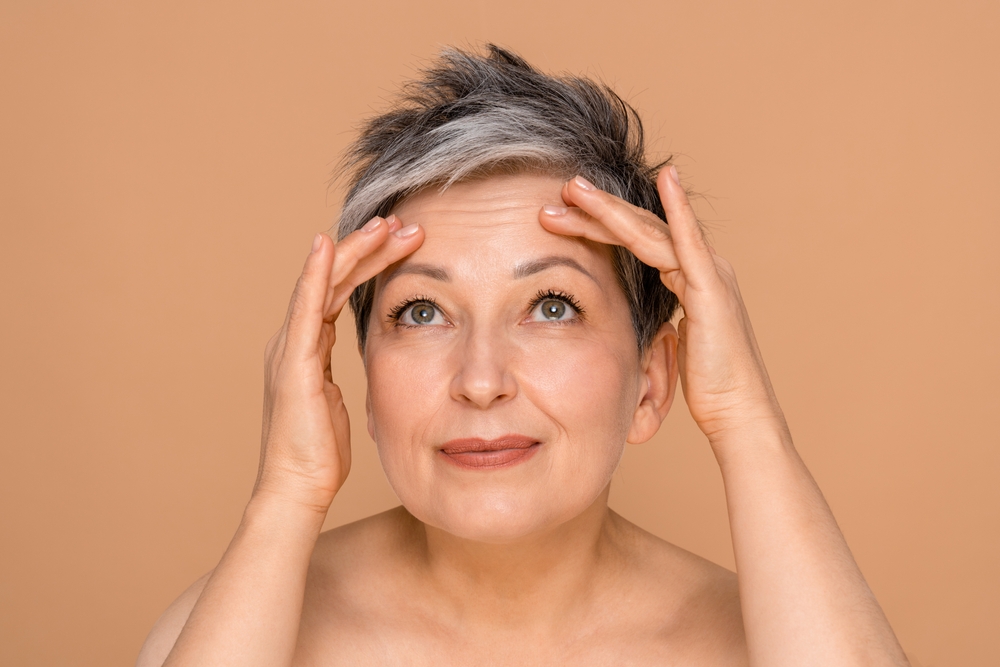
Wrinkles deepen during the menopausal transition. Jowls develop along your jawline as skin loses firmness and begins to sag[13]. Permanent lines run from the tip of your nose to the corners of your mouth [13]. Wrinkles that previously appeared only when you smiled or frowned become visible all the time[13].
Adult Acne from Hormone Changes
Adult acne affects approximately 26.3% of women ages 40 to 49[14]. After menopause, estrogen levels drop while androgens decrease more gradually and create a hormonal imbalance that triggers acne flares[14].
This creates a frustrating situation where you’re dealing with acne, wrinkles, and dry skin at once. Mature skin lacks the abundant hormones that produce oil and becomes dry and irritated by classic acne treatments[15]. Women with menopausal acne often experience increased post-inflammatory changes, including scarring and hyperpigmentation[14].
Loss of Skin Plumpness
Your skin loses its characteristic fullness as collagen networks weaken. The face appears less voluminous, with a noticeable loss of the plump, firm appearance associated with younger skin[13].
Protecting and Restoring Your Skin
Essential Skincare Ingredients
You need specific ingredients that address hormonal skin changes when you adjust your skincare approach during menopause and collagen loss. Hyaluronic acid attracts and retains up to 1,000 times its weight in water. This makes it especially effective when you have menopausal dryness[16]. This substance plumps skin and smooths fine lines while improving texture.
Ceramides are the foundations between your skin cells. They prevent moisture loss and maintain barrier integrity[6]. Your natural ceramide levels drop when estrogen declines. Topical application helps to restore protection. Niacinamide strengthens the skin barrier and reduces moisture loss while improving texture[17].
Peptides signal your skin to produce more collagen[18]. These amino acid chains offer a gentler alternative to retinol if your skin has become reactive during menopause.
The Importance of Sun Protection
Broad-spectrum SPF 30 or higher remains critical during menopause[13]. UV exposure accelerates collagen breakdown[20]. Your thinner skin during menopause becomes more vulnerable to UV damage. Daily protection is non-negotiable[21].
Vitamin C and Antioxidants
Vitamin C neutralizes free radicals from UV exposure and environmental pollutants[24]. Vitamin C becomes especially effective at reducing oxidative damage when you use it with vitamin E[24].
Retinol for Collagen Support
Retinol stimulates collagen production and protects existing collagen from breakdown[25]. This vitamin A derivative accelerates cell turnover and promotes fresher, brighter skin[25]. Start with low concentrations two to three times weekly. Your skin needs to adjust over time[18].
Collagen Benefits and Supplementation
Natural Sources of Collagen
Chicken contains high collagen levels, which explains why many supplements derive from poultry[26]. Fish provides collagen through bones and ligaments[26].
Protein and Nutrients Your Skin Needs
Three amino acids drive collagen synthesis: proline, lysine, and glycine[26]. You’ll find these in fish, poultry, eggs, dairy, and legumes[2]. Vitamin C converts amino acids into collagen[26]. Citrus fruits, berries, and leafy greens supply this nutrient[2]. Zinc and copper boost collagen creation[26] and are available in shellfish, nuts, and whole grains[2].
Menopausal Hormone Therapy Considerations
Estrogen replacement increases dermal collagen to premenopausal states and prevents further loss[4]. Collagen content rises as early as three months after starting treatment[4]. Both topical and systemic estrogen show promise for aging skin[28].
Menopause and collagen loss bring major skin changes, but understanding the connection helps you take action. You can’t stop hormonal changes, but you can protect your skin with targeted ingredients and consistent sun protection. A thoughtful routine makes a difference. Schedule a consultation with a practitioner at Beauty Vault in West Hollywood to help develop an approach tailored to your concerns. Call us today at (323) 800-6770 or fill out our contact form to schedule an appointment.
FAQs
Q1. How much collagen do women lose during menopause?
Women lose approximately 30% of their skin’s collagen in the first five years following menopause. After this initial steep decline, collagen continues to decrease at roughly 2% per year for the next 15 years. This accelerated loss happens independently of chronological age and is primarily driven by declining estrogen levels.
Q2. Why does skin become so dry during menopause?
Estrogen plays a direct role in skin hydration by stimulating production of ceramides, natural hyaluronic acid, sebum, and collagen. When estrogen levels drop during menopause, your skin loses these protective elements, allowing water to evaporate rapidly. The skin barrier weakens and ceramide composition changes, compromising its ability to retain moisture and leading to that tight, scaly, itchy feeling.
Q3. Can hormone replacement therapy help with menopausal skin changes?
Estrogen replacement can increase dermal collagen to premenopausal states and prevent further loss. Collagen content may rise as early as three months after starting treatment, and dermal thickness can increase by 30% after 12 months. Both topical and systemic estrogen show promise for addressing aging skin concerns related to menopause.
Q4. What skincare ingredients work best for menopausal skin?
Hyaluronic acid attracts and retains moisture, ceramides restore barrier function, and niacinamide strengthens the skin barrier while reducing moisture loss. Vitamin C promotes collagen production and provides antioxidant protection, while retinol stimulates collagen synthesis and accelerates cell turnover. Peptides offer a gentler alternative for signaling collagen production if skin has become reactive.
References
[1] – https://www.drlouisenewson.co.uk/knowledge/skin-changes-during-perimenopause-and-menopause
[2] – https://nutritionsource.hsph.harvard.edu/collagen/
[3] – https://www.bouldermedicalcenter.com/menopause-skin/
[4] – https://pmc.ncbi.nlm.nih.gov/articles/PMC10092853/
[5] – https://www.myalloy.com/blog/what-women-need-to-know-about-the-link-between-collagen-and-estrogen
[10] – https://nbihealth.com/how-menopause-destroys-collagen/
[11] – https://pmc.ncbi.nlm.nih.gov/articles/PMC12374573/
[12] – https://www.webmd.com/beauty/features/menopause-dry-skin-hormone-connection
[13] – https://www.aad.org/public/everyday-care/skin-care-secrets/anti-aging/skin-care-during-menopause
[14] – https://pmc.ncbi.nlm.nih.gov/articles/PMC6825478/
[15] – https://www.dermatologytimes.com/view/how-to-best-support-women-with-menopausal-acne
[16] – https://www.rebellehealth.com/resources/menopause-skincare-glow-guide
[17] – https://www.brunet.ca/en/health/health-tips/skin-menopause/
[18] – https://coral.ca/learn/menopause-collagen/
[20] – https://pmc.ncbi.nlm.nih.gov/articles/PMC4265247/
[22] – https://www.womenshealthmag.com/beauty/g65467921/sunscreen-for-mature-skin/
[23] – https://www.drlouisenewson.co.uk/knowledge/7-common-sun-protection-mistakes—and-how-to-avoid-them
[24] – https://pmc.ncbi.nlm.nih.gov/articles/PMC5579659/
[26] – https://www.healthline.com/health/beauty-skin-care/collagen-food-boost
[27] – https://pmc.ncbi.nlm.nih.gov/articles/PMC2685269/
[29] – https://optimadermatology.com/2025/03/10/boost-your-collagen
[30] – https://www.healthline.com/health/beauty-skin-care/menopause-skin-changes
[31] – https://www.tandfonline.com/doi/full/10.1080/13697137.2022.2050206
[32] – https://theconversation.com/does-menopause-cause-a-collagen-cliff-what-you-need-to-know-278127