Treatment for enlarged pores remains one of the most sought-after solutions in skincare, but home remedies often fail to deliver visible results. Your skin contains millions of pores[24], yet you can’t change their basic size[25]. But professional med spa treatments may help minimize their appearance.
Understanding Enlarged Pores: Causes and Why Home Remedies Fall Short
What Causes Large Pores on Your Face?
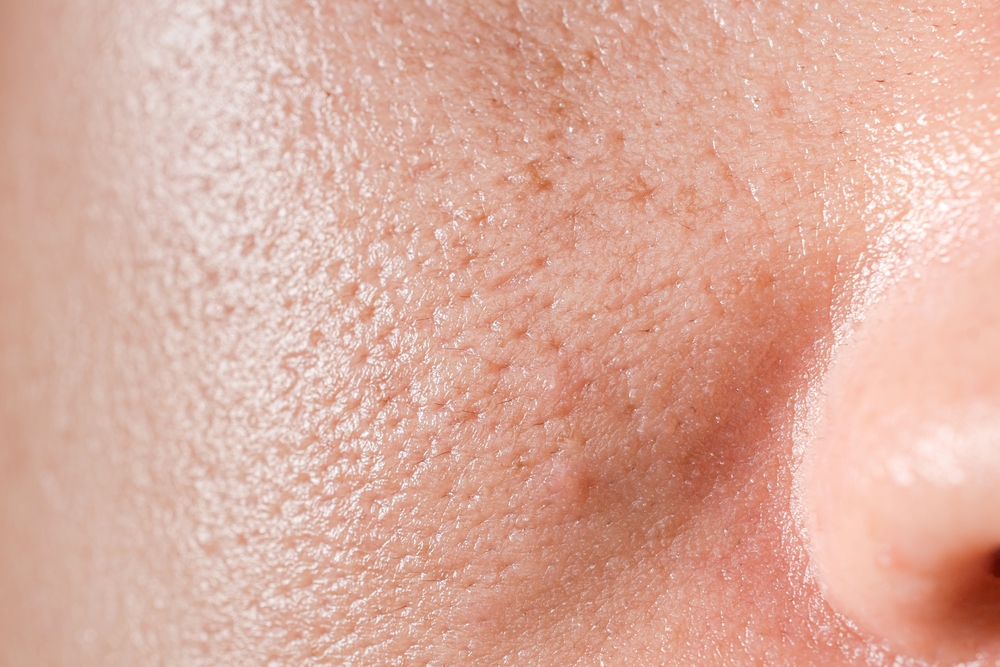
Your pore size comes down to three main factors. Research shows that enlarged pores result from high sebum excretion, decreased elasticity around pores, and increased hair follicle volume[1]. Genetics determine your baseline pore size, but environmental and biological factors can stretch them over time[26]. Sebum production plays the biggest role in pore visibility. Excess oil from your sebaceous glands stretches the follicular opening[26].
Age also affects how your pores appear. Loss of collagen and elastin weakens the walls around each pore and causes them to lose structural support[26]. Your pores can dilate and appear larger without that firm “girdle” of tissue, even when they’re not clogged.
Sun damage accelerates this process. UV exposure thickens the stratum corneum and decreases skin elasticity[26]. Chronic sun exposure also degrades collagen and widens pores over time[26]. Impacted debris like dead skin cells and pollution particles further dilates clogged pores[26].
Hormonal fluctuations matter too. Androgens stimulate oil production during puberty[26]. Pore size can increase during the ovulation phase for women[3]. Comedogenic makeup, insufficient cleansing, and smoking can all emphasize pore visibility[26].
Why Simple Skincare Often Isn’t Enough
You can keep pores clear and support surrounding collagen to make them less noticeable, but home treatments have inherent limitations.
Clay masks and exfoliants may improve appearance temporarily, but they don’t address the root structural issues. Water-based moisturizers and regular cleansing help control oil production, yet they can’t rebuild lost collagen or reverse sun damage.
Home remedies vary in effectiveness based on skin type and individual concerns[27]. Products with salicylic acid or glycolic acid might help with surface-level debris, but they won’t tighten weakened pore walls or stimulate deeper tissue repair.
Laser Treatment for Enlarged Pores: Types and Effectiveness
Laser treatments target enlarged pores through controlled thermal energy that stimulates your skin’s healing response. The approach is significantly different from topical products because lasers penetrate beneath the surface to remodel tissue structure.
Fractional Laser Resurfacing
Fractional lasers create microscopic columns of injury in your skin and leave surrounding tissue intact. This triggers collagen production while minimizing downtime compared to older ablative techniques.
A carbon dioxide fractional laser delivers the most aggressive approach. Studies document an average pore reduction rate of 15-37% after a single treatment[28]. The laser removes damaged surface cells while heating deeper layers, which tightens skin around pore openings[29].
Fraxel laser treatment targets both surface and deeper skin layers to refine texture[30]. Clinical data shows this option can reduce pore size by up to 60%, though you’ll need two to three treatments to achieve those results[31].
Clear & Brilliant, a non-ablative fractional laser, offers a gentler alternative for subtle improvements[30]. This option suits maintenance and preventative care rather than dramatic correction[30]. Erbium laser resurfacing provides precise treatment with minimal thermal damage and stimulates firmness through controlled collagen remodeling[30].
PicoSure and picosecond lasers work differently for darker skin types. These devices prove most useful for Asian, Latino, and Middle Eastern skin because they target pigment through photoacoustic treatment to tighten collagen and shrink pores[31].
Laser Genesis for Collagen Stimulation
Laser Genesis heats your upper dermis gently without damaging the surface[32]. The warming sensation feels soothing rather than painful, with no need for topical anesthetics[32].
This treatment may assist in reducing pore appearance by up to 70% through sustained collagen and elastin stimulation[33]. You’ll need a series of four to six sessions spaced several weeks apart to get optimal results[32]. Most people notice gradual improvements in skin tone, texture, and pore visibility as new collagen forms over time[32].
IPL (Intense Pulsed Light) Therapy
IPL is different from laser treatment by emitting multiple wavelengths rather than a single focused beam[34]. This allows the device to address various skin concerns at once, including pore size and pigmentation[35].
The light converts to heat as it penetrates your skin and targets dark spots while stimulating collagen production[35]. Despite its gentler approach, IPL requires more sessions than laser therapy to get comparable pore reduction results[34].
Microneedling for Pore Reduction
Microneedling stimulates your body’s repair mechanisms through controlled micro-injuries rather than thermal energy. This mechanical approach triggers collagen production differently than lasers and makes it a distinct option to address large pores on your face.
How Microneedling Works to Shrink Pores
The procedure uses sterile needles to create thousands of microscopic punctures in your skin. These controlled wounds activate your natural healing response and prompt increased collagen and elastin production through a process called dermal remodeling[4]. Your body recognizes these microchannels and initiates tissue repair, which ends up helping tighten the areas around each pore opening. The treatment proves safe for all skin types, since it doesn’t cause heat-induced damage or affect pigmentation[4].
Radiofrequency Microneedling Benefits
RF microneedling combines needle penetration with radiofrequency heat delivered into targeted deeper layers[5]. This dual mechanism offers better results compared to standard microneedling for stubborn pore concerns.
RF microneedling targets both surface texture and deeper support structures that help pores appear tighter over time[5]. The heat tightens existing collagen fibers while stimulating new collagen production[8]. To address acne-scar-related enlarged pores or deep pore stretching, RF microneedling may achieve results in fewer sessions than standard microneedling[9].
Combining with PRP for Better Results
Platelet-rich plasma derived from your own blood contains growth factors that accelerate healing and boost collagen production[4]. When paired with microneedling, PRP helps pores tighten more evenly and improves overall smoothness[9].
The addition of PRP produces superior results over microneedling alone[4], since your body’s proteins accelerate your skin’s natural healing process and reduce downtime[12].
Chemical Peels and Other Med Spa Treatments
Chemical exfoliation offers a different pathway to address large pores on the face. It dissolves dead skin cells and clears congestion rather than using thermal or mechanical injury. These treatments may complement energy-based options or serve as standalone solutions.
Medium and Deep Chemical Peels
Medium-depth peels reach the upper dermis, targeting enlarged pores linked to acne scars or sun damage and stimulating collagen and elastin production[13].
Mandelic acid peels derived from bitter almonds may work well for darker skin tones or sensitive skin[14]. Chemical peels decrease sebum production and pore size while providing anti-inflammatory and anti-bacterial properties[2].
Hydrafacial and Pore Extraction Treatments
A hydrafacial creates a controlled vacuum over pore openings. It draws out oxidized sebum without manual pressure that causes inflammation[15]. Clinical studies document that 100% of participants saw decreased pore size[17]. All subjects who completed six treatments over 12 weeks reported substantial improvement in skin feel and appearance[16].
Comparing Med Spa Options: Which Treatment Delivers the Best Results
Best Treatment for Enlarged Pores by Skin Type
Selecting the best treatment for enlarged pores depends on whether oil production or aging drives your concerns. Younger patients with oily or combination skin should focus on controlling sebum production[20]. Oily and combination skin types often see dramatic improvement from pore treatments because they have visible pores to begin with[21].
Older patients need rejuvenation in addition to sebum control[20]. Your skin loses about 1% of its collagen per year after age 20 and affects pore appearance and overall firmness[21]. This makes collagen-stimulating options more suitable as you age.
Professional treatments may offer more effective results than home remedies for enlarged pores, but you need to understand your skin’s specific needs to choose the right option. Schedule a consultation with a practitioner at Beauty Vault in West Hollywood to develop a tailored plan that addresses your unique skin concerns and goals. Call us today at (323) 800-6770 or fill out our contact form to schedule an appointment.
FAQs
Q1. Which professional treatments are most effective for reducing the appearance of enlarged pores?
The most effective professional treatments include fractional laser resurfacing (which can reduce pore size by 15-60%), RF microneedling (showing up to 41.7% reduction in pore size), and medium-depth chemical peels. Laser treatments stimulate collagen production and tighten skin, while RF microneedling combines needle penetration with radiofrequency heat to address deeper structural issues. The best option depends on your skin type, age, and whether oil production or collagen loss is your primary concern.
Q2. Can enlarged pores be permanently shrunk or closed?
No, pores cannot be permanently shrunk or closed because they lack muscular tissue and their baseline size is determined by genetics. However, professional treatments can significantly minimize their appearance for six to 18 months by improving collagen support, reducing congestion, and smoothing skin texture.
Q3. What can medical aestheticians do to help with large pores?
Medical aestheticians can perform several treatments including chemical peels that deeply cleanse and encourage cellular turnover, Laser Genesis treatments that stimulate collagen production, medical-grade facials like Hydrafacial that use vortex-powered extraction to remove debris, and dermaplaning to remove dead skin cells. These treatments address pore appearance through different mechanisms and can be combined for enhanced results.
Q4. How long does it take to see results from professional pore treatments?
Results vary by treatment type. With microneedling, you may notice improvements within two to three weeks, with marked results at four to six weeks. Laser treatments typically require three to six months to show final results because collagen production occurs gradually. Most treatments require three to six sessions spaced four to six weeks apart for optimal outcomes, with continued improvement over several months.
Q5. What causes pores to appear enlarged, and why don’t home remedies work well?
Enlarged pores result from three primary factors: high sebum production, decreased elasticity around pores, and increased hair follicle volume. Additional contributors include genetics, age-related collagen loss, sun damage, and hormonal fluctuations. Home remedies fall short because they only address surface-level concerns and cannot rebuild lost collagen, reverse sun damage, or tighten weakened pore walls that require deeper tissue repair.
References
[1] – https://pubmed.ncbi.nlm.nih.gov/26918966/
[2] – https://pmc.ncbi.nlm.nih.gov/articles/PMC6053170/
[3] – https://pubmed.ncbi.nlm.nih.gov/17034515/
[4] – https://www.advancederm.net/the-benefits-of-microneedling-with-prp-treatment/
[5] – https://kenshoderm.com/rf-microneedling-for-enlarged-pores/
[6] – https://pubmed.ncbi.nlm.nih.gov/34250567/
[7] – https://facefabulousmedspatn.com/microneedling-aftercare-recovery-guide/
[8] – https://cascadeeyeskin.com/blog/8-benefits-of-radiofrequency-microneedling-for-skincare/
[9] – https://pureskinlasercenter.com/blog/how-many-microneedling-sessions-for-smaller-pores/
[10] – https://www.boujeenurse.com/microneedling-recovery-timeline/
[11] – https://www.beauxmd.com/facial-rejuvenation/microneedling-with-prp/
[13] – https://www.calistamedspa.com/can-chemical-peels-shrink-pores/
[14] – https://drrochlin.com/whats-the-best-chemical-peel-for-acne-scars-and-large-pores/
[15] – https://www.perfectb.com/hydrafacial-blackheads/
[16] – https://www.verywellhealth.com/what-is-a-hydrafacial-8420498
[17] – https://www.hydrafacial.com/
[18] – https://qualitycaredoc.com/how-dermaplaning-works-for-glow/
[19] – https://elleskinandbeautyco.com/prevent-large-pores-with-dermaplaning/
[20] – https://pubmed.ncbi.nlm.nih.gov/36440737/
[21] – https://pensacoladerm.com/can-you-shrink-large-pores-heres-what-actually-works/
[22] – https://www.facebeautyscience.com/blog/is-there-a-way-to-permanently-reduce-pore-size/
[23] – https://laserlightsc.com/med-spa-treatments-costs-and-what-to-expect-at-your-first-visit/
[24] – https://www.healthline.com/health/open-pores
[25] – https://www.healthline.com/health/beauty-skin-care/how-to-shrink-pores
[26] – https://www.laroche-posay.com.au/blog/how-to-minimise-pores.html
[27] – https://www.olivaclinic.com/blog/home-remedies-for-open-pores/
[28] – https://pmc.ncbi.nlm.nih.gov/articles/PMC9291000/
[29] – https://www.lmaclinic.com/lma/blog/co2-laser-enlarged-pores
[30] – https://cincinnatiskinandlaser.com/can-laser-treatment-fix-large-pores/
[31] – https://drdavinlim.com/pore-size-reduction/
[32] – https://blissdermatologygroup.com/laser-genesis/
[33] – https://www.lotus-institute.com.au/benefits-of-laser-genesis-skin-therapy/
[34] – https://www.webmd.com/beauty/intense-pulsed-light-treatment-overview
[35] – https://www.cizikeyedoctors.org/clinical-services/intense-pulsed-light-ipl-therapy