Individual therapies like platelet-rich plasma treatment for hair loss and hair growth prescriptions can help protect and regrow your hair. You might wonder whether combining them could improve your results. Research suggests that pairing PRP injections with prescription medications may provide benefits for some people with thinning hair.
Understanding PRP and Prescription Hair Loss Treatments
What is Platelet-Rich Plasma Treatment for Hair Loss?
PRP therapy uses your body’s healing mechanisms to encourage hair regrowth. A practitioner at Beauty Vault will draw a small blood sample and process it in a centrifuge to separate components. This process concentrates platelets to levels exceeding 1 million platelets per microliter, increasing the concentration to two to seven times higher than what you find in normal blood[27].
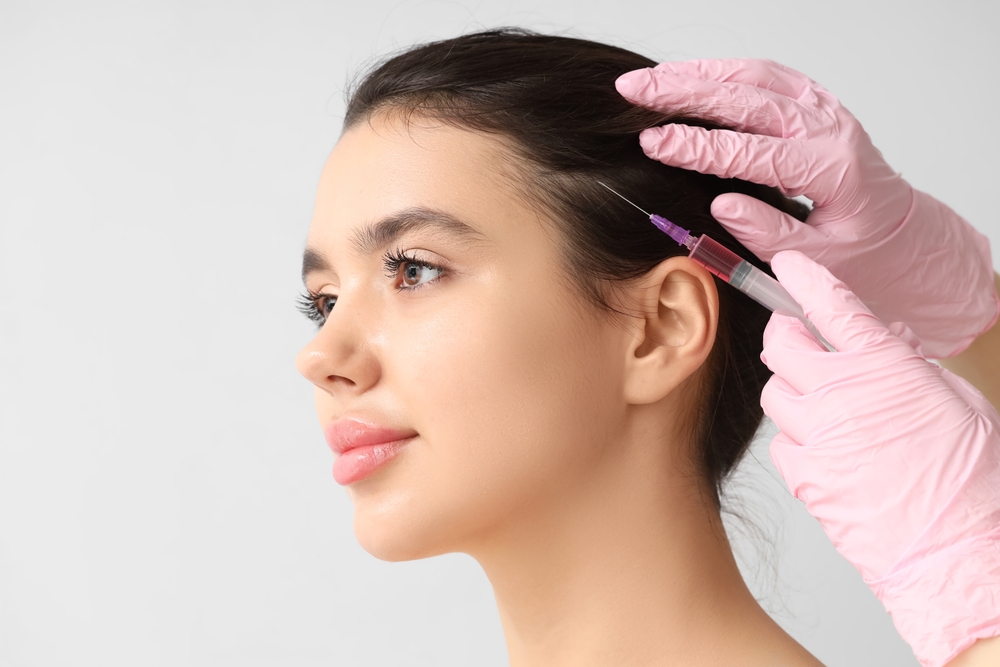
These concentrated platelets get injected into your scalp and release multiple growth factors. Each factor plays a distinct role in your hair’s regeneration process.
The treatment works by improving blood vessel formation around your follicles and preventing premature cell death. It also extends your hair’s active growth period[27]. Your scalp receives injections in areas experiencing thinning. The growth factors stimulate dormant follicles and strengthen existing hair shafts.
PRP injections for hair growth carry minimal risk when trained professionals perform them. The substance comes from your own blood, which eliminates concerns about allergic reactions or tissue-borne pathogens that might occur with foreign substances. This autologous nature makes PRP safer than many other injectable treatments.
Common Prescription Medications for Hair Growth
The FDA has approved two main medications for hair loss treatment: minoxidil and finasteride[21]. Minoxidil comes as an over-the-counter topical solution or foam that you apply to your scalp. This medication prolongs your hair’s growth phase and increases blood flow to follicles[28][29]. Women apply it once a day. Men use it twice a day for optimal results[29].
Finasteride, sold as Propecia, is a prescription oral medication taken at 1 mg per day for male pattern hair loss[30][31]. The medication addresses hair loss through hormonal pathways. It works by inhibiting Type II 5-alpha reductase, an enzyme that converts testosterone into dihydrotestosterone. This action lowers tissue DHT levels by about 66%[31]. DHT causes follicles to shrink and produce thinner, weaker hair strands over time. The effects require at least three months before becoming noticeable. Benefits reverse within 12 months after stopping treatment[30].
Spironolactone serves as an antiandrogen option for women that blocks hormones damaging hair follicles[29][32]. This prescription medication begins working after four months of consistent use. Dutasteride represents another oral option for treating pattern hair loss[29].
Can You Combine PRP with Prescription Medications?
Clinical Evidence Supporting Combined Treatment
Several clinical trials have assessed combination approaches. Researchers included studies that evaluated PRP alongside standard treatments such as topical minoxidil or oral finasteride[7].
Research shows that combining treatments may produce better outcomes than single approaches. Studies scrutinizing PRP with minoxidil showed increased hair density and hair diameter compared to monotherapy[5]. This suggests your follicles respond more robustly when targeted through multiple pathways at once.
The mechanism behind better results appears straightforward. PRP stimulates follicles while finasteride lowers DHT levels. Studies suggest greater hair density gains when PRP and finasteride work together versus either treatment alone[14]. Your follicles receive dual support through hormonal regulation and cellular activation.
FDA Approval Status and Recommendations
Blood-processing devices used to prepare PRP receive FDA clearance, but the hair loss treatment itself falls under a practice of medicine exemption[8]. This distinction matters because clearance is different from approval for a specific indication.
Most dermatology experts position PRP as a tertiary recommendation after minoxidil and 5-alpha-reductase inhibitors[10]. Specialists often view PRP as an effective adjunctive treatment for patients using pharmacologic therapy[19]. Insurance considers PRP experimental and does not cover costs[8].
Specific Prescription Combinations with PRP
Pairing specific medications with PRP thinning hair therapy creates distinct advantages based on each drug’s mechanism. Research understanding various combinations reveals how these approaches work together to address pattern hair loss from multiple angles.
PRP and Minoxidil Combination
A meta-analysis of six studies showed that PRP combined with minoxidil significantly improved hair growth beyond what either treatment achieved on its own[11]. The analysis showed a significant increase in hair density and hair diameter in the combination group[11], and patients receiving both treatments reported higher satisfaction rates compared to those using minoxidil or PRP alone[11].
PRP with Finasteride Treatment
A controlled trial showed that patients receiving both PRP and finasteride experienced 35% greater hair density improvement compared to those on finasteride alone[12]. Patient satisfaction rates reached 89% with combination therapy, much higher than monotherapy outcomes[12].
PRP and Spironolactone for Women
Spironolactone may be recommended with PRP for women with hormonally driven hair thinning, especially when you have signs of polycystic ovary syndrome or excess androgens[16]. The overall rate of improved hair loss with spironolactone was 56.60%, with a higher rate of improvement at 65.80% in combined therapy groups [15].
What Should You Expect When Combining Treatments?
Scheduling dual therapy requires coordination between your PRP sessions and daily medication use. A typical program has one PRP session monthly for three months, followed by booster treatments every six months[19]. This maintenance schedule keeps growth factors active in your scalp while your prescription medication works without interruption.
Treatment Schedule and Timing
Your practitioner at Beauty Vault will customize your treatment calendar based on your hair loss pattern. You’ll attend monthly PRP appointments while applying minoxidil twice daily to your scalp in the original months[20]. Each PRP session takes about 30 minutes, and you can resume normal activities afterward[21]. Finasteride requires daily oral dosing. This creates a consistent hormonal foundation that complements periodic PRP injections.
Expected Results and Timeline
Visible growth can appear as early as one to two months, though six months may be needed to see full benefits[19]. Many people notice reduced shedding first within the first month[2]. Peak progress often occurs between months four and six[6]. Studies show that hair density in combination therapy increased 32%, with hair shaft diameter improving by 26% in one study[5]. Maintenance treatments sustain these improvements afterward, as benefits continue with ongoing therapy[19].
Who Should Consider Combination Therapy?
Thinning hair responds better to combination therapy than areas of complete baldness. The best candidates are those experiencing early-to-moderate hair loss rather than advanced baldness, with recent onset providing optimal conditions to succeed with treatment[19].
Best Candidates to Combine Treatments
Your follicles need some remaining activity to respond to PRP thinning hair therapy. Younger age groups more commonly have thinning hair, but anyone experiencing this pattern may benefit from combination approaches[19].
PRP works best after you’ve already tried other non-invasive options[19]. Minoxidil and finasteride establish a foundation when you start with them. Adding PRP treatment may boost your results.
When to Avoid Mixing Treatments
Complete baldness in your target area eliminates candidacy for PRP hair loss therapy[19]. You should not pursue this hair loss treatment if you have a history of malignancy, platelet disorders, anemia, bleeding disorders, or immunocompromised status[5][23]. Active skin conditions including skin cancer or pre-cancer also contraindicate treatment[19][24].
Pregnancy represents an absolute contraindication to PRP[24]. If you take blood thinners such as Plavix, Coumadin or Heparin, you need to inform your provider[24]. Certain medications affect platelet function and may need adjustment before treatment.
Combination therapy might offer better results for your hair restoration experience. A consultation with a practitioner at Beauty Vault in West Hollywood can help you determine whether adding PRP to your prescription regimen could work for your unique needs. Call us today at (323) 800-6770 or fill out our contact form to schedule an appointment.
FAQs
Q1. Is PRP treatment for hair loss safe for everyone?
PRP hair restoration therapy is generally safe since it uses your own blood components, eliminating risks of allergic reactions. However, it’s not suitable for everyone. You should avoid PRP if you have platelet disorders, bleeding conditions, anemia, active skin infections, skin cancer, are pregnant, or take blood thinners like Coumadin or Heparin.
Q2. Can I use PRP therapy together with minoxidil or finasteride?
Yes, you can safely combine PRP with prescription medications like minoxidil or finasteride. Research shows that combination therapy often produces better results than using either treatment alone. PRP works by stimulating follicles with growth factors, while medications like finasteride reduce DHT levels or, in the case of minoxidil, improve blood flow. These different mechanisms complement each other, potentially leading to improved hair density and thickness.
Q3. What side effects should I expect when combining PRP with prescription hair loss medications?
When combining treatments, you may experience mild side effects from both therapies. PRP injections can cause temporary local pain, swelling, or tenderness at injection sites that usually resolves within 48 hours. Prescription medications carry their own side effect profiles that vary by medication. Serious complications from PRP are rare, and the combination typically doesn’t create additional risks beyond what each treatment presents individually.
Q4. How long does it take to see results from combined PRP and prescription treatment?
You may notice reduced hair shedding within the first month of combination therapy. Visible new growth can appear as early as one to two months, though most people need four to six months to see full benefits. Studies show that combination therapy can increase hair density by up to 32% and improve hair shaft diameter by 26%. Results require ongoing maintenance treatments to sustain improvements.
Q5. Who is the best candidate for combining PRP with prescription hair loss medications?
The ideal candidates are individuals with early-to-moderate hair loss rather than complete baldness, as follicles need some remaining activity to respond to treatment. Combination therapy works particularly well for those who have already tried other treatments and want to enhance their results through a multi-pathway approach.
References
[1] – https://pmc.ncbi.nlm.nih.gov/articles/PMC8923145/
[3] – https://pmc.ncbi.nlm.nih.gov/articles/PMC4622412/
[5] – https://pmc.ncbi.nlm.nih.gov/articles/PMC10768946/
[6] – https://macinnisdermatology.com/prp-hair-loss-treatment-timeline-when-you-might-see-results/
[7] – https://www.frontiersin.org/journals/medicine/articles/10.3389/fmed.2022.843127/full
[8] – https://ubiehealth.com/doctors-note/fda-prp-approval-confuse-reality-med-next-steps-4844q2
[9] – https://pmc.ncbi.nlm.nih.gov/articles/PMC6220002/
[11] – https://pubmed.ncbi.nlm.nih.gov/38789807/
[12] – https://hairgp.co.uk/prp-finasteride-double-your-hair-loss-defense/
[13] – https://www.drprpusa.com/blog/prp-vs-finasteride-for-hair-regrowth.html
[14] – https://ubiehealth.com/doctors-note/prp-vs-finasteride-hair-loss-treatment-meds-prp-1744q3
[15] – https://pmc.ncbi.nlm.nih.gov/articles/PMC10502763/
[19] – https://ishrs.org/patients/treatments-for-hair-loss/medications/platelet-rich-plasma/
[20] – https://pmc.ncbi.nlm.nih.gov/articles/PMC8800610/
[21] – https://pmc.ncbi.nlm.nih.gov/articles/PMC8922312/
[22] – https://charlesmedicalgroup.com/general/hair-loss-treatment-combination-therapy/
[24] – https://pimaderm.com/wp-content/uploads/2018/12/PRP-for-Hair-Loss-Pre-Post-Instructions-10.18.pdf
[25] – https://www.cliniquedc.com/en/blog/prp-contraindications
[26] – https://mcpress.mayoclinic.org/women-health/androgenic-alopecia-hair-loss-isnt-only-for-men/
[27] – https://pmc.ncbi.nlm.nih.gov/articles/PMC6374694/
[29] – https://www.mayoclinic.org/diseases-conditions/hair-loss/diagnosis-treatment/drc-20372932
[30] – https://my.clevelandclinic.org/health/drugs/19638-finasteride-tablets-alopecia
[31] – https://ishrs.org/patients/treatments-for-hair-loss/medications/finasteride/
[32] –https://nyulangone.org/conditions/hair-loss/treatments/medication-for-hair-loss