Botox for men has become more popular, but you might wonder if your results will look different from women’s treatments. The answer lies in understanding how facial muscle structure and dosage requirements vary between genders. The FDA approved Botox for cosmetic use in 2002[25], and practitioners have refined techniques since then to create natural-looking results tailored to masculine features.
What is Botox, and How Does It Work for Men?
What Botox Does to Facial Muscles
Your wrinkles form through two mechanisms: dermal atrophy and repetitive muscle contractions[1]. Each time you frown, squint, or raise your eyebrows, those movements create creases in your skin. Over time, these dynamic wrinkles become etched into your face as static lines visible even at rest. Botox addresses this by causing localized muscle relaxation that prevents those repetitive contractions from deepening existing lines.
You won’t see results right after your injections. The effects typically begin working one to three days after treatment, though full results may take up to two weeks to develop[6]. This paralysis of the local muscles usually occurs within 24 hours to two weeks following injection[26]. At first, they last three to four months once the effects develop[1][6]. Many men find their results extend to four to six months with regular treatments[27].
Why Men are Getting Botox Injections
The numbers tell a compelling story about shifting attitudes toward cosmetic treatments. Back in 2018, more than 450,000 men received injections, making it the most popular cosmetic procedure for men by far[29]. Men now account for up to 30 percent of all Botox procedures by some estimates[27][30].
Professional competition drives many men to seek treatment. Deep forehead lines or a permanent frown can unintentionally convey stress or fatigue, even when you feel energized. Smoothing these lines helps you project vitality and approachability in competitive job markets. The dating scene presents another motivation. Many men want to project a vibrant, engaging appearance on dating apps and at social events[31].
Preventative care has also gained traction. Men in their late 20s and 30s are choosing Botox not just to correct existing wrinkles but to prevent them from forming[29][31]. Regular treatments can stop expression lines from becoming deep, etched-in folds over time.
The stigma around aesthetic treatments has faded. Men hear their friends discuss treatments and feel more comfortable learning about options themselves[28].
Key Differences Between Men’s and Women’s Botox
Your facial anatomy determines how Botox for men works differently than treatments designed for women. These biological differences affect everything from the number of units required to the precise placement of each injection.
Facial Muscle Structure Differences
Men have facial muscles that are 15-20% larger and more developed than women’s[35]. Your muscles across the forehead, the corrugators that create frown lines, and the orbicularis oculi around your eyes are often thicker and generate much stronger contractions[36]. This increased muscle mass creates deeper expression lines and more pronounced wrinkles.
Research shows men demonstrate larger facial expressions even after adjusting for differences in face size[37]. You also have greater upward vertical movement of facial muscles when smiling or puckering your lips[37]. Then these anatomical realities create more severe wrinkles in nearly all facial areas.
Skin Thickness and Texture Variations
Men’s skin is about 25% thicker than women’s skin, with a denser collagen matrix[35]. This thickness affects not only injection depth but also how the neurotoxin disperses through tissue[35]. Men have thicker epidermis and dermis layers compared to women[37].
The collagen content in your skin reduces at a constant rate throughout your life[38]. Women’s skin remains stable until menopause, when it thins more over a shorter period[38]. Men’s higher collagen density means their skin ages differently and develops fully grooved wrinkles later but more once they appear[38].
Dosage and Botox Units for Men
Men require 1.5 to 2 times the number of units used for women in the same treatment areas because of stronger facial musculature[36]. Research from 2024 indicates men need an average of 25-40% higher Botox doses to achieve comparable muscle relaxation[35]. Standard upper-face treatment requires 50 to 80 units for men versus 30 to 50 units for women[39].
Your forehead often requires 20 to 40 units compared to 10 to 20 units for women[36]. The glabellar complex between your brows can require 30 to 40 units, with some men needing up to 80 units to address the powerful muscles in this area[36][4]. Treating crow’s feet may require 15 to 20 units per side versus 10 to 12 units for women[36]. Inadequate dosing is the biggest cause of unsatisfactory results in male patients[4].
Injection Depth and Technique
Your thicker skin and larger muscle mass require deeper injection points using strategic muscle mapping[35]. Practitioners at Beauty Vault identify individual muscle fiber directions and strength variations to customize your treatment. Your brow sits lower and flatter compared to the arched female brow and requires careful thought to avoid feminizing effects[35].
Men want straight brows while women prefer arched ones[39]. Injectors must understand exactly where to place Botox to maintain your natural brow shape and height. Most men prefer subtle softening that preserves some movement rather than smooth skin[36]. This conservative approach helps you look rested while maintaining masculine facial characteristics.
Popular Botox Treatments for Men
Forehead Lines and Crow’s Feet
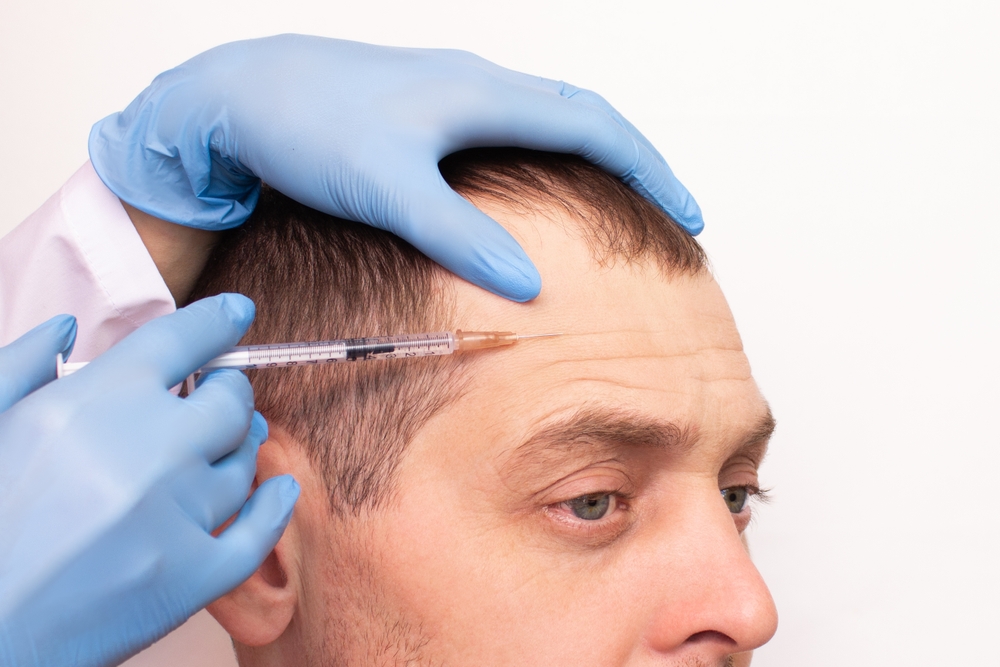
Forehead Botox ranks as one of the most requested treatments for men. These horizontal creases form from years of raising your eyebrows or frowning. Botox can smooth the skin and relax the frontalis muscle[3]. You might notice a reduction in forehead wrinkles within three to five days, with effects that last three to four months[3].
Crow’s feet are the lines that radiate from your eyes’ corners. They can become especially noticeable starting in your 30s and 40s[8]. Treatment can help reduce their appearance and provide a more refreshed look. The procedure takes only about a minute, and results last three to four months[9]. You can expect effects to become noticeable within three days[9].
Masseter Botox for Men (Jawline Slimming)
Masseter Botox serves dual purposes and addresses both aesthetic and functional concerns. Strong masseter muscles can create a boxy, square jawline that looks disproportionate to the rest of your face[5]. Treatment slims these muscles and creates a softer, more elegant V-shape to the lower face[5].
Masseter Botox can relieve teeth grinding and TMJ-related discomfort[5]. This treatment may help reduce the grinding reflex if you’ve tried mouthguards without success[5]. Results appear within two to four weeks, with effects that last three to six months[10].
Frown Lines Between Eyebrows
Frown lines between your eyebrows are often called “11s.” They can make you appear angry or tired even when relaxed[3]. Botox works by relaxing underlying muscles to smooth your skin and elevate the height of your eyebrows[11]. This brow lift effect allows forehead muscles to pull up the now-relaxed muscles between the brows and open up your eyes[11].
Treatment can help you look more approachable and less stressed[3]. The key involves ensuring the treatment doesn’t erase all expression, which remains a common concern for male patients[8].
Neck Bands and Other Areas
Botox Cosmetic became the first FDA-approved treatment for moderate to severe platysma bands[12]. These vertical bands connect the neck and jaw and can affect jawline definition[12]. Treatment involves injections along the jawline and vertical bands, with dosing that ranges from 26 to 36 units depending on band severity[12]. Results may begin to appear within days, with full results visible in two weeks[13].
Botox for men does look different than women’s results, and with good reason too. Your stronger facial muscles, thicker skin, and anatomy require higher doses and customized injection techniques to achieve natural-looking results that preserve masculine features. A consultation with a practitioner at Beauty Vault in West Hollywood can help you understand the right dosage, treatment areas, and expectations based on your specific goals and facial structure. Call us today at (323) 800-6770 or fill out our contact form to schedule an appointment.
FAQs
Q1. Do men need different Botox doses than women?
Yes, men typically require 25-40% higher Botox doses than women due to stronger facial muscles that are 15-20% larger and more developed. Standard upper-face treatment usually requires 50 to 80 units for men compared to 30 to 50 units for women. The forehead alone may need 20 to 40 units for men versus 10 to 20 units for women.
Q2. How long does Botox last for men?
Botox results for men typically last three to four months, though some men may experience a slightly shorter duration of around 2.5 to 3.5 months. Stronger facial muscles can break down Botox more quickly. With regular treatments, results may extend to four to six months as muscles become trained to respond better over time.
Q3. What are the most popular Botox treatment areas for men?
The most requested treatment areas for men include forehead lines, frown lines between the eyebrows (also called “11 lines”), and crow’s feet around the eyes. Masseter Botox for jawline slimming and teeth grinding relief has also become increasingly popular, along with treatments for neck bands and chin dimpling.
Q4. When will I see results after getting Botox?
You can expect to notice initial results within three to seven days after treatment, with full effects becoming visible around two weeks post-injection. The effects typically begin working 1 to 3 days after treatment, though the full transformation may take up to 14 days to develop.
References
[1] – https://www.aafp.org/afp/2014/0801/p168
[2] – https://pmc.ncbi.nlm.nih.gov/articles/PMC7874868/
[3] – https://lipsanddripsllc.com/wrinkle-free-look-with-botox-for-men/
[4] – https://pubmed.ncbi.nlm.nih.gov/18093014/
[5] – https://www.virginiafacialplasticsurgery.com/blog/masseter-botox-relief-and-aesthetics
[6] – https://www.mayoclinic.org/tests-procedures/botox/about/pac-20384658
[7] – https://oregonmanclinics.com/blog/botox/how-long-does-botox-last-for-men-compared-to-women/
[8] – https://www.bougieaesthetics.net/brotox-how-botox-for-men-is-administered-differently/
[9] – https://www.healthline.com/health/botox-for-crows-feet
[10] – https://www.menkesclinic.com/can-botox-help-give-me-a-sharper-jawline/
[11] – https://www.healthline.com/health/botox-brow-lift
[12] – https://www.botoxcosmetichcp.com/indications/pb-indications
[13] – https://rhmedicine.com/blog/platysmal-bands-botox.html
[14] – https://www.schweigerderm.com/skin-care-articles/botox/botox-for-the-first-time-what-to-expect/
[15] – https://coastalmedicalspa.com/how-to-prepare-for-botox-guide/
[16] – https://www.plasticsurgery.org/cosmetic-procedures/botulinum-toxin/procedure
[17] – https://my.clevelandclinic.org/health/treatments/8312-botulinum-toxin-injections
[18] – https://www.menonmedispa.com/post/first-botox-appointment-a-step-by-step-guide/
[19] – https://rieyeinstitute.com/article/botox-recovery-time-what-to-expect-after-treatment/
[20] – https://www.plasticsurgery.org/cosmetic-procedures/botulinum-toxin/recovery
[21] – https://www.healthline.com/health/beauty-skin-care/how-long-does-botox-take-to-work
[22] – https://www.schweigerderm.com/skin-care-articles/botox/botox-for-men/
[24] – https://www.bostonmedicalaesthetics.net/blog/who-should-not-get-botox/
[25] – https://www.healthline.com/health/botox
[26] – https://pmc.ncbi.nlm.nih.gov/articles/PMC6489637/
[27] – https://www.drmovassaghi.com/blog/why-botox-is-different-for-men/
[29] – https://www.drfarrior.com/blog/botox-for-men/
[30] – https://www.empiremedicaltraining.com/blog/where-are-the-most-common-botox-areas-for-men/
[31] – https://www.dermrochester.com/blog/botox-for-men-the-guys-guide/
[32] – https://chicagodermmd.com/common-botox-treatment-areas-for-men/
[33] – https://pmc.ncbi.nlm.nih.gov/articles/PMC5300725/
[34] – https://www.gq.com/story/guys-guide-to-botox
[35] – https://coastalmedicalspa.com/botox-for-men/
[36] – https://dermsurgery.net/do-men-need-different-botox-dosing-than-women/
[38] – https://int.eucerin.com/about-skin/basic-skin-knowledge/male-and-female-skin
[39] –https://aptinjectiontraining.com/blog/differences-between-botox-for-men-and-women/