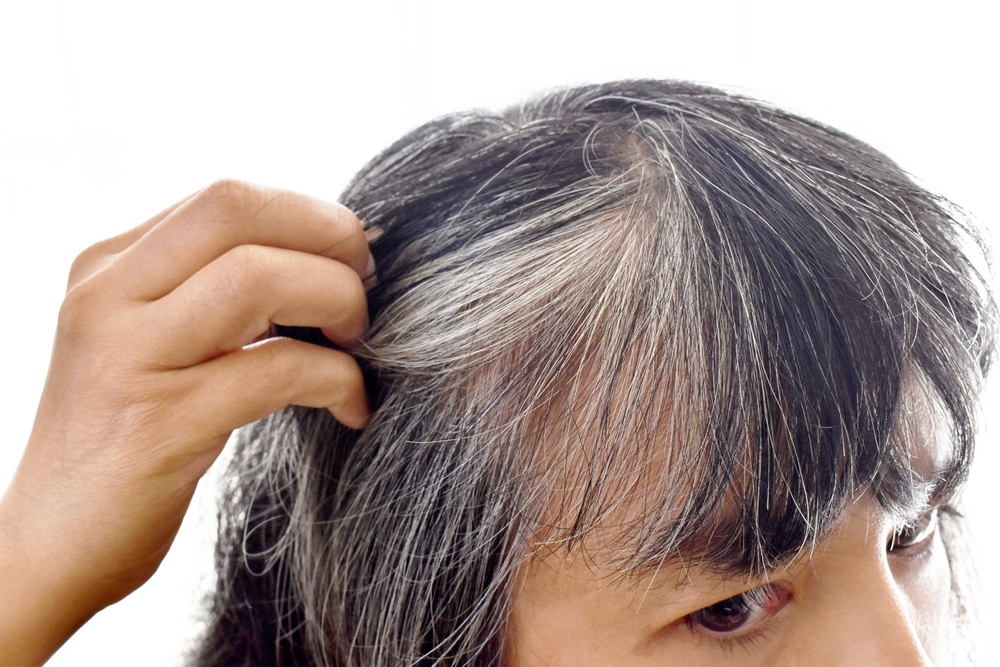
Menopause hair thinning is a common concern that affects up to 50% of women during this life transition[9]. The thick hair you had as a young adult may become fine and thin[20]. You can explore treatment options that may work for your situation when you understand the reasons behind thinning hair during menopause.
What Happens to Your Hair During Menopause?
Your hair follicles respond to hormonal changes in ways that become visible over time. You might notice more strands in your shower drain, on your pillow, or tangled in your brush. Your ponytail feels thinner when you pull it back, or your part looks wider than it used to. Research indicates that two out of three people experience hair thinning and increased shedding during menopause[1].
Hair Thinning vs. Hair Loss
Hair thinning and hair loss represent different stages and types of change. Normal shedding involves losing between 50 and 100 hairs per day as part of your regular hair growth cycle[2]. This number often increases beyond the normal range during menopause.
Telogen effluvium causes diffuse hair loss throughout your scalp. Your hair becomes thin all over, without following a specific pattern[3]. This type occurs when physical or emotional stress pushes more hair follicles into the shedding phase at once. The hormonal changes of menopause can trigger this widespread shedding[4].
Androgenetic alopecia, also called female pattern hair loss (FPHL), follows a distinct pattern. In one study, more than half of people experienced this type of hair loss after menopause[1]. Individual hairs become more widely spaced, shorter, and finer[3]. Keep in mind that your hairline stays intact, and complete baldness remains rare in women[3].
Your hair also changes in texture and quality. Strands may feel drier or coarser than before[1]. You might notice more split ends, and coloring or heat styling can cause more breakage than it used to[1]. The scalp produces less sebum, the natural oil that moisturizes your hair, leading to increased dryness[5].
Where Thinning Occurs Most
The thinning location depends on your hair loss type. Female pattern hair loss starts near your center part and progresses toward the crown of your head[1]. Thinning concentrates over the front and top of your scalp and down the sides of your head[3]. The crown area becomes noticeable as hair density decreases in this region[4].
Some women experience both patterns at once. Diffuse hair loss affects the whole scalp, while frontal hair loss results in hairline recession[3]. Both may occur with increased facial hair growth as androgens become more dominant relative to estrogen levels.
Your hair follicles shrink with age and cause the strands emerging from them to become thinner and weaker[1]. Blood flow to your follicles decreases and limits the delivery of oxygen and nutrients needed for healthy growth[1]. Lower estrogen levels reduce this blood flow and result in weaker strands and a slower growth cycle over time[1].
How Quickly Thinning Progresses
Menopausal hair loss develops over time rather than appearing suddenly. The process begins during perimenopause, the years before your final menstrual period, and continues for several years after menopause starts[2]. Changes unfold over months or years, not weeks[2].
Your hair growth cycle shortens as estrogen declines. The growth phase that lasts several years becomes abbreviated and less efficient[2]. Hair follicle stem cells become less active with aging and further slow the growth cycle[1]. You shed hair faster than you can grow it back during this transition[3].
Hair growth treatments require three to six months before showing improvements[4]. This timeline reflects your natural hair growth cycle, which operates on its own biological schedule.
The Real Reason: Hormonal Changes Behind Menopause Hair Loss
Hormones control nearly every aspect of your hair’s behavior, from how long each strand grows to how thick it becomes. During menopause, specific hormonal changes create conditions that favor hair thinning over hair growth.
Estrogen and Progesterone Decline
Estrogen and progesterone levels decrease abruptly after menopause[22]. Estrogen keeps your hair in the anagen (growth) phase for extended periods[21]. A shortened growth phase means your hair produces shorter, thinner strands that shed more easily. Progesterone hormone inhibits the enzyme 5-alpha-reductase, which converts testosterone to DHT[22]. More testosterone transforms into the potent hair-thinning hormone DHT without adequate progesterone to block this conversion[22]. This loss of protective inhibition contributes substantially to menopausal hair loss in women.
Rising Androgen Levels
Your ovaries continue producing androgens for up to 10 years after your final menstrual period[22]. Estrogen drops sharply while androgen secretion declines gradually and remains active into later life[23]. This creates a relative increase in androgens even if absolute levels don’t rise above premenopausal ranges.
This ratio matters more than absolute hormone values. Your body’s sudden loss of estrogen removes the protective shield that previously blocked DHT’s effects on your follicles[8]. Even normal androgen levels can trigger thinning hair and menopause-related changes without this protection.
Medical Treatments That Actually Work
Several FDA-approved and off-label treatments may help address menopausal hair loss in women when hormonal changes trigger thinning. These options target different mechanisms, from blocking DHT to stimulating follicle activity.
Minoxidil (Rogaine)
Minoxidil remains the only FDA-approved topical treatment for female pattern hair loss. This medication widens blood vessels near your follicles, increasing blood flow and delivering more oxygen and nutrients to support active hair growth[8].
You typically see results after four months of routine use[8], though some studies indicate improvements within two to four months[25]. Once you stop using minoxidil, any newly regrown hair will shed within 12 to 24 weeks[24]. This creates a need for continuous application to maintain results.
Finasteride and Dutasteride
These 5-alpha-reductase inhibitors block the conversion of testosterone to DHT. Studies show finasteride provides clinical improvement in approximately 70% to 86% of patients[26].
Dutasteride inhibits both type I and type II 5-alpha-reductase enzymes, making it more potent than finasteride[27]. Research indicates dutasteride 0.15 mg daily over three years improves female pattern hair loss in as many as 80% of patients[26]. One study found oral finasteride improved hair density and thickness better than topical minoxidil in postmenopausal women[25].
Spironolactone
This anti-androgen medication blocks DHT from attaching to your hair follicles[8]. The overall rate of improved hair loss reaches 56.60%[28]. Most people need to take spironolactone for at least six months before seeing results[29]. It usually takes 12 to 16 weeks of daily use to begin seeing effects[8].
Hormone Replacement Therapy
HRT may improve hair density for some women experiencing menopause-related hair thinning [8]. However, the relationship between HRT and hair growth remains complex, as testosterone-containing formulations can worsen thinning[8].
Low-Level Laser Therapy
LLLT uses red light to stimulate hair follicles while reducing inflammation[31]. Studies demonstrate statistically significant hair regrowth in both males and females[6]. The FDA approved LLLT in 2007 for androgenetic alopecia[6].
Platelet-Rich Plasma Injections
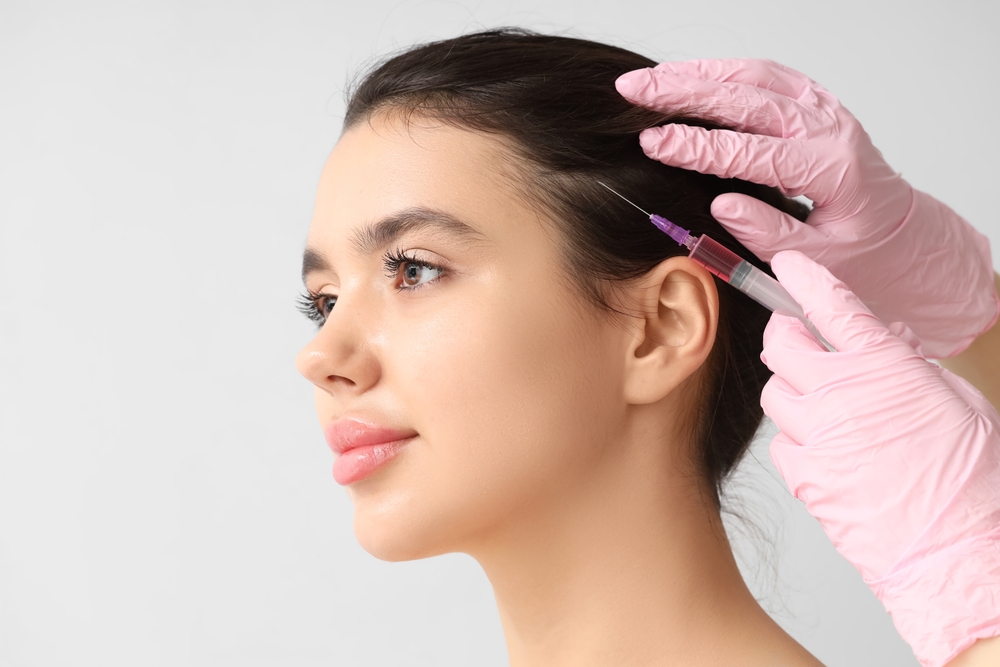
PRP therapy concentrates platelets from your own blood and injects them into your scalp[13]. The growth factors stimulate dormant follicles and prolong the anagen phase[13].
Lifestyle Changes to Slow Hair Thinning
Medical treatments address the biochemical causes of menopause hair thinning, but daily habits play a supporting role in slowing progression. Not all women experience hair changes during this transition, and factors beyond hormones affect hair health[9]. Lifestyle factors that affect hair thinning include:
- Stress. Chronic stress lifts cortisol levels and depletes nutrients your hair needs to grow. Yoga, meditation, and deep breathing exercises reduce cortisol and help restore balance[11]. Managing stress prevents the hormonal imbalance that can worsen hair loss and menopause symptoms.
- Exercise. Regular physical activity improves blood circulation to your scalp and delivers nutrients your follicles need[14].
- Diet. A balanced, low-fat diet supplies essential nutrients that serve as precursors in hormone synthesis and support hair maintenance[9]. Iron deficiency causes hair loss[12], while essential fatty acids maintain hair structure[10]. Consider supplements like biotin, zinc, iron, and vitamin D, as deficiencies contribute to thinning hair and menopause-related changes[9].
- Hydration. Water supports blood flow, and your follicles rely on adequate blood supply to deliver nutrients needed for healthy hair[12].
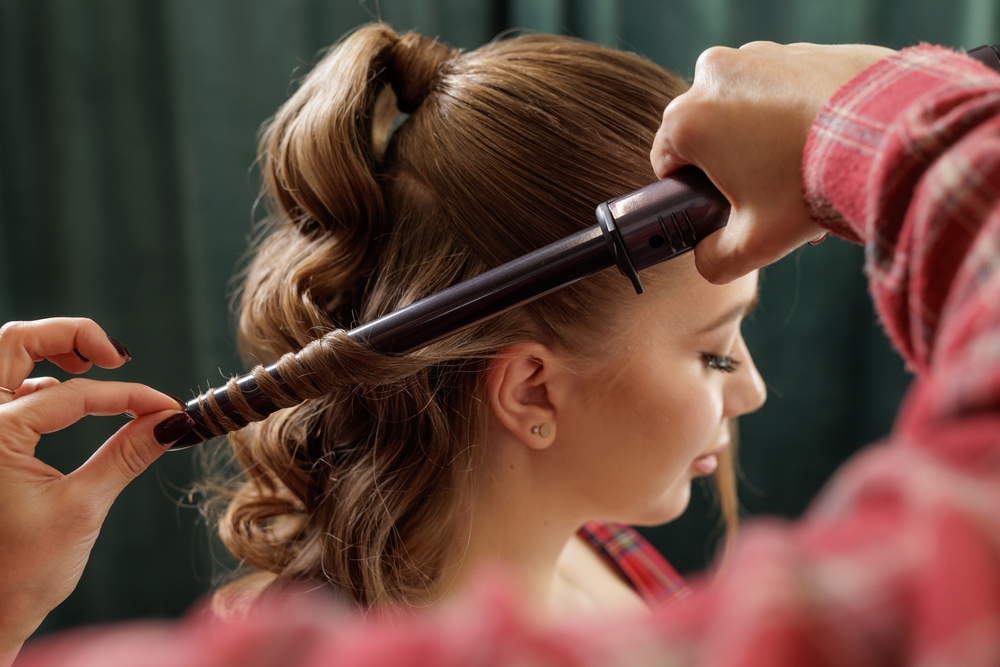
- Hair practices. Heat tools like dryers and straightening irons cause drying and breakage[10]. Extensions and tight hairstyles weaken hair and cause early loss[10]. Choose all-natural hair colors instead of artificial chemicals that compromise scalp health[10].
Your hair loss pattern and hormone levels determine which treatment approach might suit you best. A practitioner at Beauty Vault in West Hollywood can assess your specific situation, recommend tailored treatment options, and monitor your progress. Call us today at (323) 800-6770 or fill out our contact form to schedule an appointment.
FAQs
Q1. Is it possible to reverse hair thinning that occurs during menopause?
Yes, hair thinning during menopause can often be reversed or improved with the right approach. Medical treatments like minoxidil, finasteride, spironolactone, and PRP injections have shown effectiveness in stimulating hair regrowth. These treatments work by targeting the hormonal changes that cause thinning, such as blocking DHT or improving blood flow to hair follicles. Most treatments require three to six months of consistent use before visible improvements appear, and early intervention typically leads to better outcomes.
Q2. What are the most effective ways to thicken hair that has become thin during menopause?
Thickening menopausal hair involves both medical treatments and lifestyle modifications. FDA-approved minoxidil 5% increases blood flow to follicles and promotes thicker growth. Anti-androgen medications like spironolactone block DHT from shrinking hair follicles. Supporting these treatments with a nutrient-rich diet containing iron, essential fatty acids, biotin, and zinc helps strengthen hair structure. Additionally, avoiding heat styling, tight hairstyles, and harsh chemicals prevents further damage while your hair rebuilds its thickness.
Q3. Will my hair grow back after menopause ends?
Hair can grow back after menopause with appropriate treatment, though it depends on the extent of follicle damage. If hair follicles have only miniaturized rather than completely stopped functioning, treatments can reactivate them. Medical interventions like finasteride show clinical improvement in 70-86% of patients, while dutasteride improves hair density in up to 80% of cases. However, once treatment stops, newly regrown hair typically sheds within 12-24 weeks, making continuous treatment necessary to maintain results.
Q4. Can menopause-related hair loss be prevented before it starts?
While you cannot completely prevent menopause hair loss due to inevitable hormonal changes, you can minimize its severity. Managing stress through yoga and meditation helps control cortisol levels that deplete hair-supporting nutrients. Regular exercise improves scalp blood circulation, delivering essential nutrients to follicles. Maintaining a balanced diet rich in iron, omega-3 fatty acids, and vitamins supports hormone synthesis and hair health.
References
[2] – https://www.goldenstatedermatology.com/blog/when-to-worry-about-hair-loss-during-menopause/
[3] – https://www.northsidewomenshealth.com/articles/losing-hair-during-menopause-heres-what-to-do-next
[6] – https://pmc.ncbi.nlm.nih.gov/articles/PMC8906269/
[7] – https://news.umiamihealth.org/en/hair-loss-and-menopause-what-dermatologists-want-you-to-know/
[8] – https://www.mavenclinic.com/post/hormone-replacement-therapy-for-hair-loss
[9] – https://pmc.ncbi.nlm.nih.gov/articles/PMC10669803/
[10] – https://www.healthline.com/health/menopause/hair-loss
[11] – https://www.altitudedermatology.com/blog-post/stress-induced-hair-loss
[12] – https://www.forthwithlife.co.uk/blog/menopause-hair-loss-whats-the-connection/
[13] – https://pmc.ncbi.nlm.nih.gov/articles/PMC11342464/
[14] – https://www.hoag.org/articles/why-women-lose-hair-during-menopause-and-what-you-can-do-about-it
[15] – https://themenopausecharity.org/information-and-support/what-can-help/hydration/
[16] – https://www.cuyunamed.org/knowledge-hub/hair-skin-menopause/
[18] – https://pmc.ncbi.nlm.nih.gov/articles/PMC8678083/
[19] – https://www.healthline.com/health/menopause/how-to-track-menopause-symptoms
[20] – https://www.webmd.com/healthy-aging/maintain-hair-growth-after-50
[21] – https://www.sacdermatology.com/what-really-causes-menopausal-hair-loss-and-how-to-address-it/
[22] – https://www.sciencedirect.com/science/article/pii/S0378512225001860
[23] – https://pmc.ncbi.nlm.nih.gov/articles/PMC7432488/
[24] – https://pmc.ncbi.nlm.nih.gov/articles/PMC6691938/
[26] – https://www.sciencedirect.com/science/article/pii/S295019892500087X
[27] – https://pmc.ncbi.nlm.nih.gov/articles/PMC11694415/
[28] – https://pmc.ncbi.nlm.nih.gov/articles/PMC10502763/
[29] – https://www.healthline.com/health/spironolactone-for-hair-loss
[30] – https://pmc.ncbi.nlm.nih.gov/articles/PMC10615536/
[31] –https://www.meditresse.com/blog/how-hormone-replacement-therapy-hrt-can-influence-hair-growth/