About 50 million men and 30 million women face hair loss, and many of them search high and low for treatment options. Three types of treatments dominate the conversation: PRP hair treatment and Minoxidil, along with finasteride. This piece gets into clinical evidence comparing these options and helps you understand which approach may suit your specific situation.
How PRP for Hair Loss Works
The Science Behind Platelet-Rich Plasma
PRP hair treatment uses components already present in your blood to potentially stimulate hair regrowth. Platelet-rich plasma consists of two elements: plasma (the liquid portion of blood) and platelets (blood cell fragments known for their clotting abilities) [1]. Growth factors within platelets can trigger cell reproduction and stimulate tissue regeneration in treated areas [1].
A clinician draws a blood sample from you and places it into a centrifuge to create PRP for hair loss [1]. This device spins the sample and separates blood into distinct layers: red blood cells at the bottom, platelet-poor plasma, and platelet-rich plasma in the middle buffy coat layer [2]. The goal is to concentrate platelet levels two to six times higher than your normal baseline [2][3].
PRP Injection Process and What to Expect
The procedure takes 45 to 60 minutes from start to finish during a PRP session [4][2]. Your Beauty Vault practitioner draws your blood and processes the sample in the centrifuge while you wait [3][2]. Your scalp receives cleansing with alcohol, and some practitioners apply a topical anesthetic to reduce discomfort, though local anesthesia isn’t always necessary [3][2].
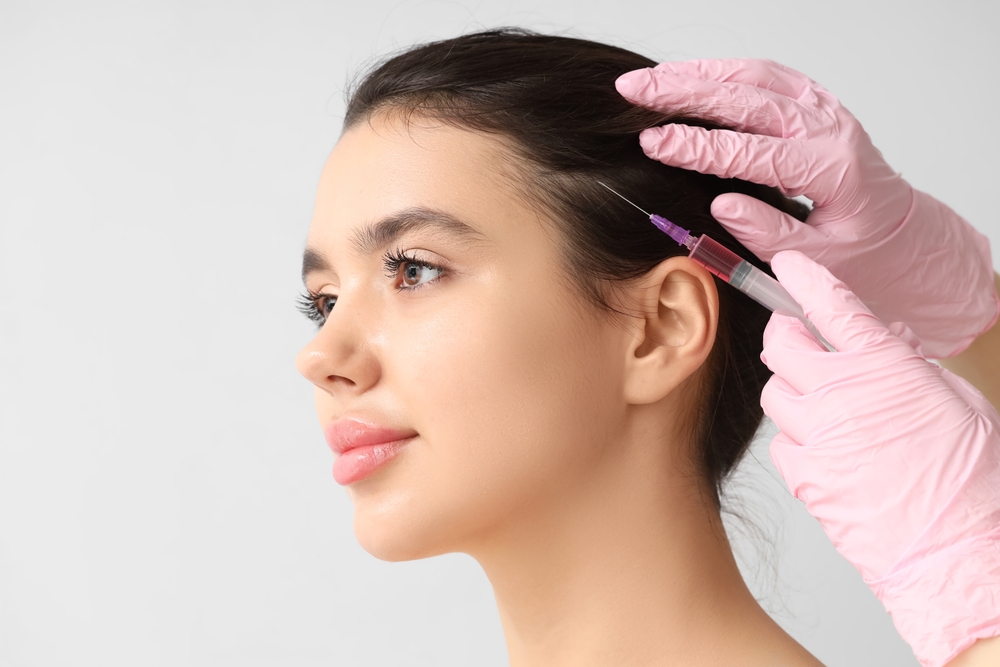
Beauty Vault practitioners inject the prepared PRP into your scalp using fine needles spaced one centimeter apart across affected areas [1][2]. This allows for as many as 120 injection sites per session [2]. Most patients describe the sensation as pressure or mild tingling rather than substantial pain [4].
Growth Factors That Stimulate Hair Follicles
The concentrated platelets in PRP release multiple growth factors when activated. Each growth factor serves specific functions in hair regeneration, such as forming new blood vessels around hair follicles [5][3] and prolonging the growth phase of your hair cycle [5].
The Basics of Minoxidil Treatment
How Minoxidil Promotes Hair Growth
Minoxidil began as an oral medication for high blood pressure before its hair growth properties were found as a side effect. This vasodilator widens blood vessels, including those in your scalp, increasing blood flow, oxygen, and nutrients to hair follicles [1].
The medication appears to shorten the resting phase of your hair growth cycle and pushes dormant follicles to enter the growth phase prematurely [7]. It also extends the anagen phase itself so hair can grow longer and thicker before shedding [3]. On top of that, it stimulates the growth factors that promote blood vessel formation around follicles [9].
Effectiveness Timeline: When to See Results
Results become visible around eight weeks after starting treatment [11]. You may notice some increased shedding during the first one to three weeks. This indicates your scalp is responding as old hairs make way for new growth [3]. Peak effects occur around the four-month mark, with maximum results appearing by 12 months [12].
Limitations of Minoxidil for Hair Thinning
Note that Minoxidil does not block DHT, the hormone responsible for male pattern baldness. In these cases, the root cause of hair loss continues unchecked [8].
Finasteride Treatment: Blocking DHT for Hair Retention
Understanding DHT and Male Pattern Baldness
Finasteride treatment targets the root cause of male pattern baldness rather than just stimulating follicles. The body has an enzyme that converts testosterone into dihydrotestosterone (DHT), a potent androgen that binds to receptors in scalp hair follicles and causes them to shrink and produce weaker, thinner hair strands [13]. It shortens the growth phase and prolongs the resting phase of your hair cycle if you are genetically susceptible [14].
Finasteride counters this by inhibiting the enzyme that turns testosterone into DHT [13]. This lowers tissue DHT levels by about 60% to 70% [13][4], which can halt follicle miniaturization and allow some recovery of shrunken follicles.
Success Rates in Preventing Hair Loss
Large multi-year studies demonstrate finasteride’s effectiveness in a majority of treated men. A five-year study showed 65% of men with mild to moderate male pattern hair loss had positive results, with hair loss reduced or hair regrowth stimulated [13]. After two years of treatment, 83% of finasteride users experienced no further hair loss compared to baseline, versus only 28% of placebo recipients [7][19].
Making Your Decision: Which Treatment Fits Your Needs?
Your hair loss pattern and stage influence which treatment may work best. Androgenetic alopecia affects up to 50% of men and 40% of women by age 50 [25], yet response to treatment varies based on when you start and what you choose.
Severity of Hair Loss and Treatment Selection
Early intervention produces better outcomes than waiting until hair loss advances [27]. This is because your follicles heal best before sustaining significant damage [28]. If you’re experiencing original thinning, you might respond well to single-agent therapy like Minoxidil or finasteride. However, more advanced cases may require multiple approaches working together.
Combining Treatments for Better Outcomes
Studies show that combination therapy outperforms individual treatments. For example, patients receiving both PRP and Minoxidil saw hair density increase by 32%, compared to 12% with PRP alone [25]. This combined approach exceeded PRP monotherapy results by 2.9 times for hair density and 2.2 times for hair shaft diameter [25]. Finasteride works cooperatively with Minoxidil [28], with 94% of men using both showing improvement versus 80% on finasteride alone [29].
PRP can boost medication effectiveness when added to your existing regimen [30]. Some practitioners use rotational therapy and alternate between different modalities at various periods to minimize side effects while optimizing results [31]. Starting with one treatment and adding others as you progress through different phases may improve long-term outcomes.
Permanence and Maintenance Requirements
PRP results last 9 to 16 months and need maintenance sessions every 6 to 12 months [26]. Both Minoxidil and finasteride just need daily, indefinite use [26]. Hair loss resumes within months if you stop either medication [26].
Considerations for Customized Care
Your Beauty Vault provider can review your specific hair loss type through scalp examination and medical history review [8]. They will assess factors like family history, hair loss progression, scalp health, tolerance for side effects, and any underlying medical conditions [29]. This evaluation determines which hair loss treatment options suit your situation.
Let the Beauty Vault Help You Choose Between PRP, Minoxidil, and Finasteride
Most people who suffer from hair loss experience similar feelings and frustrations about their condition. However, all situations are unique, even when the diagnosis is technically the same. Choosing hair loss treatments requires careful consideration and customization, and the Beauty Vault team in West Hollywood is prepared to guide you through it. Call us today at (323) 800-6770 or fill out a contact form to schedule an appointment.
FAQs
Q1. Is PRP more effective than Minoxidil and finasteride for treating hair loss? Research indicates that PRP therapy can be as effective or more effective than Minoxidil and finasteride, particularly when used in combination. Studies show that PRP alone increased hair density by 12%, while Minoxidil showed 16% improvement. However, combining PRP with Minoxidil produced the best results with a 32% increase in hair density, significantly outperforming either treatment used alone.
Q2. What are the most common side effects of minoxidil treatment? The most frequently reported side effects of Minoxidil include scalp irritation, dryness, and unwanted facial hair growth. Studies show that 46.5% of patients experience some side effects, with scalp irritation occurring in 13.8% of users, facial hair growth in 12.3%, and increased hair shedding in 9.8%. These symptoms often result from irritant contact dermatitis, allergic reactions, or worsening of seborrheic dermatitis.
Q3. How long does it take to see results from each hair loss treatment? Minoxidil typically requires three to six months before visible results appear, with peak effects around 4 months. Finasteride can show results in three to four months, with continued improvement up to a year. PRP usually involves three sessions spaced a month apart, with patients noticing improvements within three to six months after starting treatment.
Q4. Do I need to continue treatment indefinitely to maintain results? Yes, maintenance requirements vary by treatment. Both Minoxidil and finasteride require daily, indefinite use to maintain results, with hair loss resuming within 12 to 24 weeks after stopping. PRP results typically last 9 to 16 months and require maintenance sessions every 6 to 12 months to sustain improvements.
Q5. Can combining different hair loss treatments improve outcomes? Yes, combination therapy consistently outperforms single treatments. Studies demonstrate that patients receiving both PRP and Minoxidil saw hair density increase by 32%, compared to just 12% with PRP alone. Similarly, 94% of men using both finasteride and Minoxidil showed improvement versus 80% on finasteride alone, indicating that combining treatments produces significantly better results.
References
[1] – https://www.hims.com/blog/oral-vs-topical-minoxidil
[2] – https://pmc.ncbi.nlm.nih.gov/articles/PMC3969676/
[3] – https://www.nhs.uk/medicines/finasteride/common-questions-about-finasteride/
[4] – https://dermnetnz.org/topics/finasteride
[5] – https://pmc.ncbi.nlm.nih.gov/articles/PMC8922312/
[6] – https://www.sciencedirect.com/science/article/pii/S2352647518300315
[7] – https://pubmed.ncbi.nlm.nih.gov/9951956/
[8] – https://www.mayoclinic.org/diseases-conditions/hair-loss/diagnosis-treatment/drc-20372932
[10] – https://jamanetwork.com/journals/jamadermatology/fullarticle/2817326
[11] – https://www.dunedinmedical.co.nz/post/prp-vs-minoxidil-finasteride-nz
[12] – https://pmc.ncbi.nlm.nih.gov/articles/PMC12480729/
[13] – https://ishrs.org/patients/treatments-for-hair-loss/medications/finasteride/
[14] – https://www.dhiinternational.com/the-role-of-dht-in-hair-loss-and-how-finasteride-blocks-it/
[15] – https://pmc.ncbi.nlm.nih.gov/articles/PMC4171668/
[16] – https://www.nhs.uk/medicines/finasteride/how-and-when-to-take-finasteride/
[17] – https://www.drugs.com/dosage/finasteride.html
[18] – https://drhair.co.uk/blog/finasteride-dosage-for-hair-loss/
[19] – https://www.hims.com/blog/are-finasteride-results-legit-what-the-average-man-can-expect
[21] – https://www.nhs.uk/medicines/finasteride/side-effects-of-finasteride/
[23] – https://canadamedlaser.ca/prp-vs-minoxidil-or-finasteride-what-actually-works-for-hair-regrowth/
[24] – https://www.drprpusa.com/blog/prp-vs-finasteride-for-hair-regrowth.html
[25] – https://pmc.ncbi.nlm.nih.gov/articles/PMC8923145/
[26] – https://www.rejuvenceclinic.co.uk/how-long-does-prp-hair-treatment-last/
[28] – https://www.vcuhealth.org/news/a-dermatologists-guide-to-hair-loss-treatments/
[29] – https://bringbackhair.com/how-to-combine-hair-loss-treatments-for-maximum-results/
[30] – https://assureclinic.com/blog/combining-prp-with-other-hair-loss-treatments-whats-the-best-approach/