Can’t decide between CO2 laser and microneedling for your acne scars? Many people face this dilemma. In fact, research shows acne leaves some form of scarring in about 80% of patients, affecting their appearance and self-confidence.
Both treatments can improve your scars, but they work differently. This article will help you learn how each method tackles acne scars and what factors matter most for your decision. Knowing your options will guide you toward the right treatment for your skin’s needs.
Understanding Acne Scar Types Before Choosing a Treatment
Your acne scar type plays a crucial role in choosing between treatments like microneedling and CO2 lasers. Each scar responds differently to various treatments, so you need to know the right classification to get the best results.
Atrophic Scars: Ice Pick, Boxcar, and Rolling
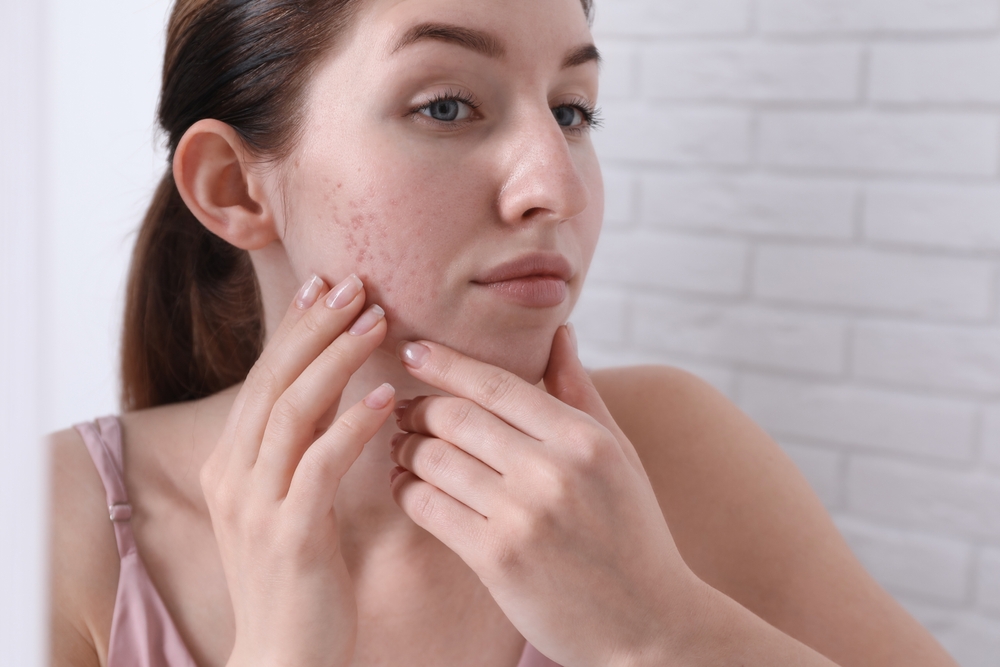
The skin loses tissue during healing and creates depressions known as atrophic scars. These scars make up 80% to 90% of all acne scars [1] and come in three distinct types.
Ice pick scars look like narrow, deep channels that go straight into the dermis – much like puncture wounds. These V-shaped depressions are less than two millimeters wide but run deep [1]. You’ll find them mostly on the cheeks, and they make up 60% to 70% of all atrophic scars [1][2]. Surface-level treatments struggle to address their depth.
Boxcar scars show up as wide, crater-like depressions with sharp vertical edges. These round or oval dents are typically one to four millimeters wide [1] and represent 20% to 30% of atrophic scars [1][2]. The lower cheeks and jaw’s thicker skin make them common spots for these scars [1].
Rolling scars create a wavy texture across your skin. Unlike boxcar scars’ sharp edges, rolling scars have gentle slopes and measure four to five millimeters across [1]. They account for 15% to 25% of atrophic scarring [1][2]. Fibrous bands pull the skin’s surface down to deeper layers, which creates that characteristic wave-like look.
Hypertrophic and Keloid Scars
Extra collagen production during healing leads to hypertrophic and keloid scars, which rise above the skin instead of creating depressions.
Hypertrophic scars stay within the original acne lesions’ borders. These firm, raised bumps appear exactly where inflammatory lesions once existed [1]. Your jawline, chest, back, and shoulders [3] are prone to these scars because the skin there remains more taut [3].
Keloid scars take raised scarring to another level. They grow beyond the original wound edges [3] and might keep expanding. They also take months or years to develop, unlike hypertrophic scars that form within one to two months [3].
Microneedling Treatment: Benefits and Limitations
Microneedling stands out as a gentle way to treat acne scars. This technique creates tiny, controlled injuries that tap into your skin’s natural healing.
Microneedling for Acne Scars: How It Works
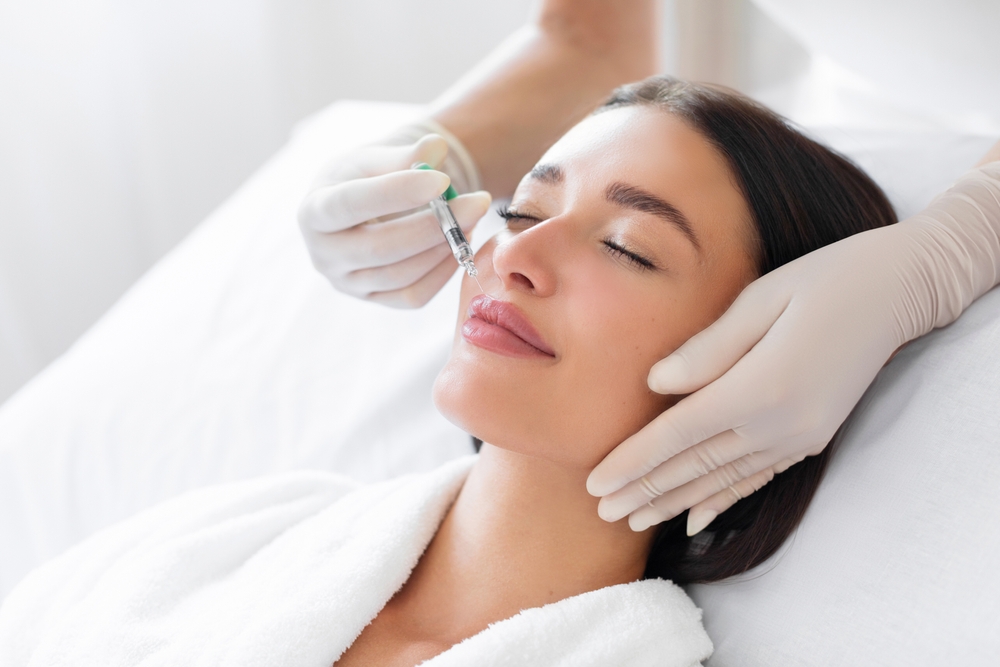
Microneedling—also known as collagen induction therapy—uses tiny sterile needles to make thousands of microscopic holes in your skin. These small injuries trigger your body to heal itself and make more collagen and elastin, the proteins that keep your skin firm and young [4].
The procedure uses a special device with needles that can go from 0.5 milliliters to 2.5 milliliters deep, based on the area and your skin’s thickness [1]. Most doctors use a stamping method. They hold the device against your skin for two to three seconds to make 400 to 600 tiny holes before moving to the next spot [1]. Small spots of blood show that the needles have reached the right depth [1].
Best Scar Types for Microneedling
Your acne scar type affects how well microneedling works. Research shows boxcar and rolling scars respond best [1]. These scars get better because the treatment boosts collagen right under the dip in your skin, which can raise the scar after several treatments.
Lab studies prove that skin gets thicker and produces more collagen and elastin after microneedling [1]. All the same, icepick scars or deep scars embedded in the lower layers don’t improve much with this treatment alone [1]. These tough scars might need extra treatments like subcision to break up the tough bands underneath. Also, people need three to six treatments several weeks apart to see the best results [5].
Side Effects: Redness, Swelling, and Rare Risks
After your treatment, you might notice:
- Redness that lasts one to two days [4].
- Mild swelling and tight skin [6].
- Some pain or discomfort [2].
- Tiny scabs and peeling [1].
These effects usually clear up within 48 hours, and you can get back to your routine in two days [2]. Serious problems are rare but might include:
- Infections [7].
- New scars [8].
- Allergic reactions to products used during treatment [7].
- Bruising where the needles went in [8].
People with active skin issues like herpes, eczema, or acne breakouts should wait until their skin clears up. Microneedling might make these conditions worse [9].
Microneedling for Sensitive and Darker Skin
Sensitive skin often handles microneedling well, despite the needles. Unlike harsh chemicals or lasers, this treatment tends to be gentler on reactive skin [4]. Doctors can adjust the needle depth based on your skin’s sensitivity [4].
Dark skin also fares well with microneedling. The treatment doesn’t use heat, so it’s less likely to cause dark spots [1]. However, experts suggest that people with darker skin should get more treatments at gentler settings instead of fewer intense ones to lower the risk of irritation [10].
Good aftercare is vital, especially protecting your skin from the sun, since treated areas become more sensitive to UV rays, no matter your skin tone [6].
Laser for Acne Scars: Types and Effectiveness
Laser technologies are a great way to treat acne scars by delivering precise energy to your skin. Your skin type and scar patterns will determine the best treatment intensity, recovery time, and suitability.
CO2 Laser for Acne Scars: Deep Resurfacing
Carbon dioxide (CO2) lasers stand out as the most powerful and effective treatment for acne scarring. This ablative technique removes the top skin layer and heats deeper layers [3]. Your skin responds by making more collagen, which helps repair and smooth out depressed scars [11].
Fractional CO2 technology has made traditional methods better by creating tiny treatment zones instead of removing all surface skin. The laser creates microscopic holes in deeper skin layers that trigger new collagen growth to smooth acne scars [11]. Your healthy skin stays intact between treated spots, so you heal faster [12].
You’ll need 10 to 21 days to heal completely [13]. The improvements keep showing up for six months as your collagen rebuilds [14].
Laser for Wrinkles and Acne Scars: Combined Benefits
Laser treatments can fix multiple skin issues at once. Most lasers that work on acne scars will also improve your wrinkles, uneven texture, and discoloration [3].
The same collagen boost that fills in scars also firms and tightens aging skin [13]. This makes it perfect if you’re dealing with both acne scars and aging signs [17].
Risks of Hyperpigmentation in Darker Skin Tones
The biggest problem with laser treatments—especially for darker skin—is post-inflammatory hyperpigmentation (PIH) [3]. This happens because lasers target melanin in your skin, which can lead to uneven coloring [18].
Radiofrequency microneedling might be safer if you have medium to dark skin and worry about hyperpigmentation [3].
Combination Therapy: When Both are Used Together
Using both microneedling and lasers together means fewer treatment sessions, more comfort, and superior overall results [21]. Nevertheless, you may want to start with microneedling before adding laser therapy for greater improvements [2]. This step-by-step approach allows gradual enhancement while managing recovery time.
Come to the Beauty Vault for Microneedling or Laser Treatments
If you’re looking to boost your confidence and heal your skin after acne left its scars, microneedling and lasers are both effective options. However, you must determine your specific scar types, skin tone, and goals before you start any treatment. The Beauty Vault team in West Hollywood is eager to assist and create a personalized plan that’s just right for your needs. To book a consultation, call us today at (323) 800-6770 or fill out a contact form.
FAQs
Q1. Which treatment is more effective for acne scars: Microneedling or laser? The effectiveness depends on your specific scar type and skin tone. Microneedling is generally better for mild to moderate scars and darker skin tones, while laser treatments can be more powerful for deeper scars but carry higher risks for darker skin.
Q2. How long is the recovery time for microneedling compared to laser treatments? Microneedling typically has a shorter recovery time of one to three days with minimal redness. Laser treatments, especially CO2 lasers, usually require 5 to 10 days of social downtime with more noticeable side effects like redness and peeling.
Q3. Are these treatments suitable for all skin types? Microneedling is generally safer for all skin types, including darker skin tones. Laser treatments, particularly CO2 lasers, carry a higher risk of hyperpigmentation for medium to dark skin tones.
Q4. How many sessions are typically needed for visible results? Microneedling usually requires three to six sessions spaced four to six weeks apart. Laser treatments are more intensive, so they might achieve comparable results in fewer sessions, but the exact number varies based on scar severity and type.
Q5. Can microneedling and laser treatments be combined for better results? Yes, combining these treatments can often yield better outcomes than either alone. Many dermatologists recommend starting with microneedling and later incorporating laser therapy for deeper improvement, allowing for gradual enhancement while managing recovery time.
References
[1] – https://castlederm.com/acne-scar-treatment/
[2] – https://skinfitmedicalspa.com/co2-laser-or-microneedling-for-acne-scars/
[3] – https://www.mayoclinic.org/tests-procedures/laser-resurfacing/about/pac-20385114
[4] – https://duluthmedspa.com/is-microneedling-safe-for-sensitive-skin-what-you-need-to-know/
[7] – https://www.mirrormirrorhouston.com/blog/microneedling-for-sensitive-skin/
[8] – https://bhskin.com/blog/microneedling-side-effects/
[9] – https://www.healthline.com/health/microneedling-for-acne-scars
[10] – https://www.refinery29.com/en-us/microneedling-for-dark-skin
[11] – https://www.schweigerderm.com/skin-care-articles/acne/laser-treatments-acne-scars/
[12] – https://www.healthline.com/health/beauty-skin-care/laser-treatment-for-acne-scars
[13] – https://www.asds.net/skin-experts/skin-treatments/laser-resurfacing/laser-resurfacing-for-acne-scars
[14] – https://cutis.com.au/acne-scar-treatment/co2-laser-resurfacing-acne-scars/
[15] – https://my.clevelandclinic.org/health/treatments/11015-laser-skin-resurfacing
[16] – https://www.americanboardcosmeticsurgery.org/lasers-for-people-of-color
[17] – https://castlederm.com/fractional-co2-lasers-can-one-treatment-fix-both-acne-scars-and-wrinkles/
[18] – https://www.healthandaesthetics.co.uk/advice/laser-safe-dark-skin/
[19] – https://www.massgeneral.org/dermatology/laser-cosmetics/treatments-and-services/darker-skin
[20] – https://pmc.ncbi.nlm.nih.gov/articles/PMC10978375/
[21] – https://metropolisdermatology.com/combining-acne-scar-treatments-for-maximum-results/
[22] – https://coastalmedicalspa.com/microneedling-vs-laser-downtime-results-and-cost-compared/
[24] –https://advanceddermchi.com/blogs/acne-scars-laser-treatment