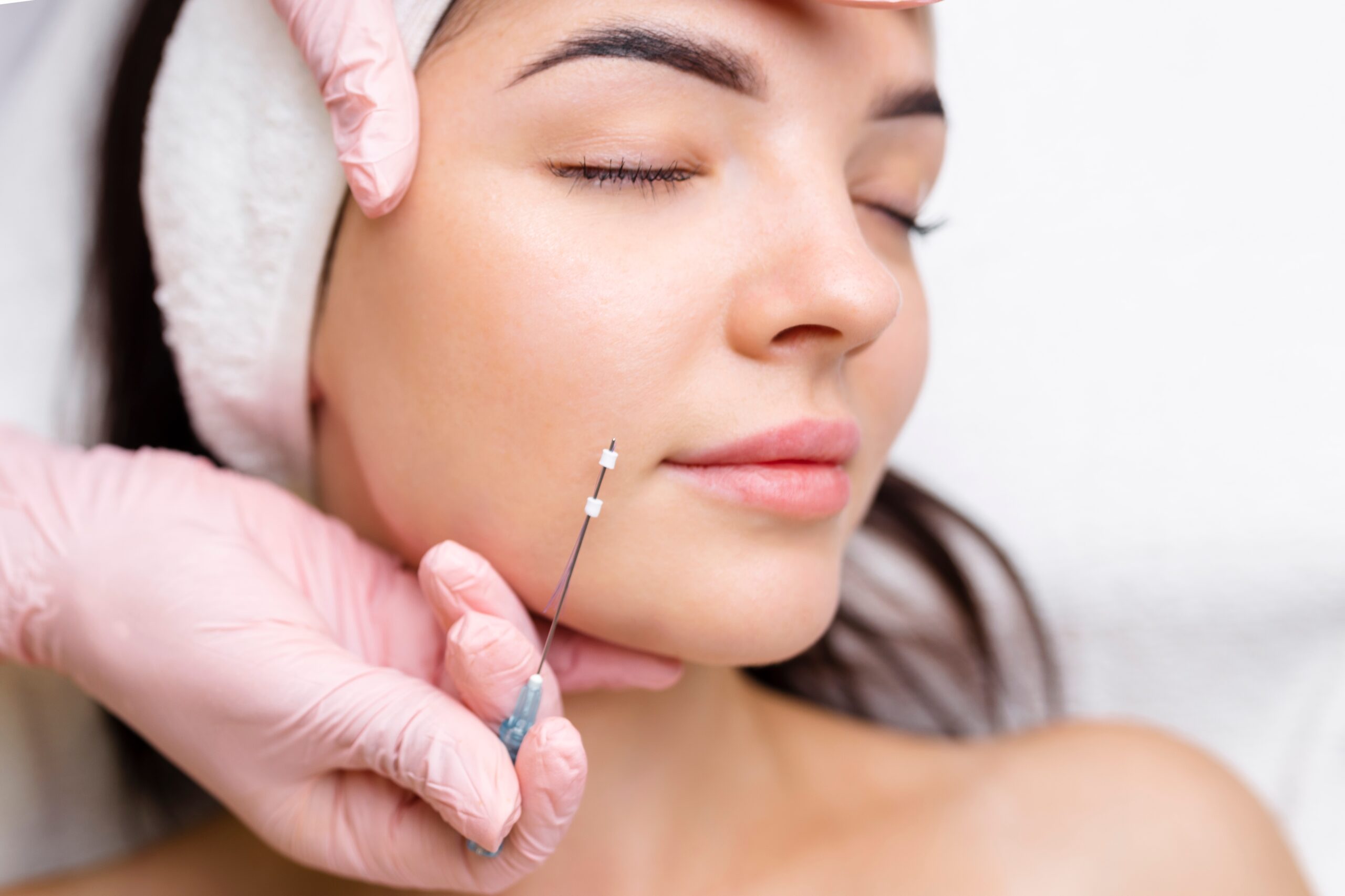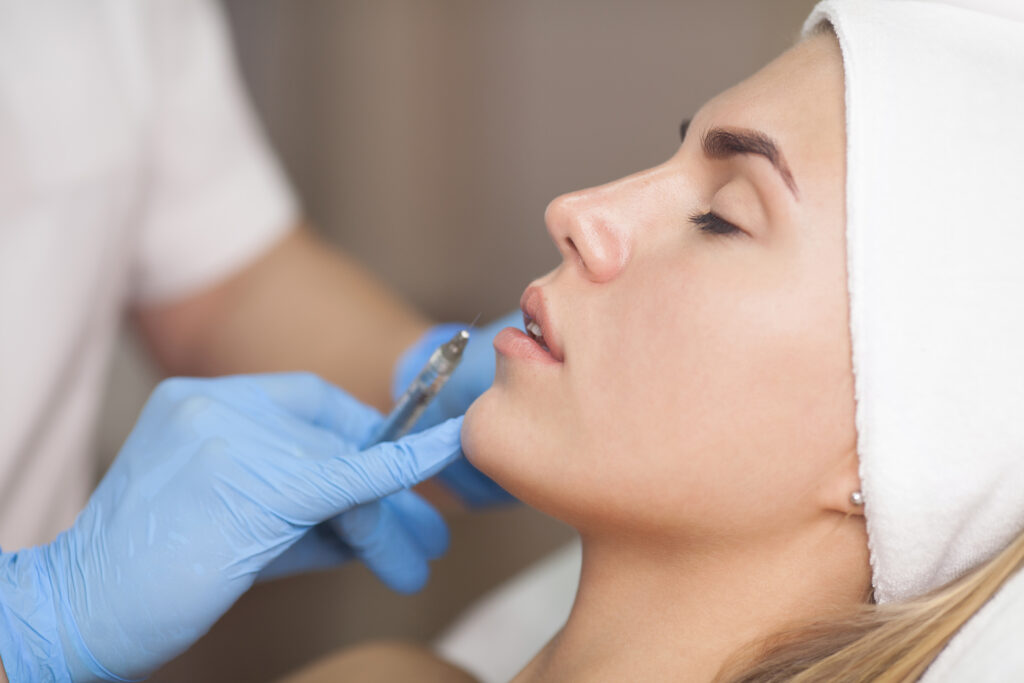
People love dermal fillers; more than 1 million treatments happen yearly because they work amazingly well to address cosmetic concerns in faces of all shapes and ages. Your face’s youthful contours can be restored with fillers once you start seeing aging signs like volume loss or sagging. It also helps fix uneven features and boosts your natural looks, whatever your facial structure might be. Read on to learn how fillers can do so much for you.
Understanding Facial Aging Across Decades
Your face changes remarkably throughout life. Each decade brings new changes in volume, structure, and skin quality. These progressive changes explain why certain dermal filler treatments work better as you age.
Facial Volume Loss in 20s to 40s
Facial aging starts earlier than most people think. Your collagen production starts declining gradually around age 25, dropping about 1-1.5% each year. You might not see visible changes right away, but this marks the start of aging.
The first noticeable changes usually show up in your 30s. You might see subtle flattening and hollowing in your cheeks while your nasolabial groove gradually deepens and your upper lip lengthens.
Furthermore, your face’s fat distribution changes between ages 30 and 40. Fat used to spread evenly across your forehead, temples, cheeks, and areas around your eyes and mouth, but with the passing of time, the fat pads start deflating as the superficial fat moves downward.
Structural shifts in 50s and beyond
More noticeable structural changes happen after 50. Your facial skeleton goes through major remodeling from bone resorption, especially in the maxilla and mandible, which changes from an L-shape to a thinner, more slanted I-shape. Women experience this resorption faster after menopause. In fact, their faces age up to three times faster than men’s between ages 50-60.
The jawline also loses its definition as fat becomes more visible in the jowls. However, men and women’s chin projections change differently. Women’s mandibles rotate backward, reducing chin projection, while men often show increased chin projection.
Skin Elasticity and Collagen Decline by Age
Skin quality transforms along with volume and structural changes. Elastin production drops sharply around age 45, following the earlier collagen reduction. Your skin becomes less elastic, so it doesn’t stretch and bounce back like before. Hyaluronic acid levels also drop, making your skin drier and more fragile with less volume. Research comparing young (18-29 years) and older (80+ years) skin found 68% less collagen production in older skin.
These age-related changes help us understand how dermal fillers work. Modern face fillers do more than just “fill wrinkles.” They support structure, replace lost volume, and sometimes boost your natural collagen production when placed correctly based on your age and original facial structure.
How Fillers Work to Support Facial Structure
Modern dermal fillers do more than just fix wrinkles. These injectable treatments work in support facial structures at multiple tissue levels to create results that look natural.
Role of Hyaluronic Acid in Volume Restoration
Hyaluronic acid (HA) fillers are the most popular choice to restore facial volume.
Your body naturally produces HA, which makes it very safe and effective to use. HA fillers start working right away by pulling in water molecules, and encouraging collagen production, adding volume and hydration and restoring structure. On top of that, these fillers blend and improve its elasticity.
Collagen stimulation with polylactic acid
Poly-L-lactic acid (PLLA) helps your cells to make more collagen as well, but it works differently from HA fillers. Basically, it provokes a mild inflammatory response that draws in fibroblasts, which synthesize collagen. It makes your body produce more collagen, restoring its volume and elasticity.
Most people need multiple treatments about a month apart. The results usually show up gradually over several months and can last up to two years.
Filler Strategies for Different Face Shapes
Facial structure varies greatly, which makes customized dermal filler treatment crucial to achieve the best results for each person. Every face shape offers unique opportunities and challenges when it comes to face fillers.
Fillers for Round Faces: Elongation and Contouring
Round faces usually have smooth lines, wider middle thirds, rounded jawlines, and shorter chin areas. The main goal is to create visual elongation and definition. The original dermal filler treatment should build structure without adding too much volume to the midface.
Many patients with round faces ask for a treatment strategy that includes:
- Adding filler to the chin area to create elongation and projection, which increases facial length.
- Boosting the cheekbones with fillers placed at the top layer of skin or the layer right next to the bones.
- Treating the prejowl area and posterior mandibular line to boost definition.
This method can change a round face by creating more angular contours that slim the appearance.
Heart-Shaped Faces: Lower Third Volume Correction
Heart-shaped faces show wider cheekbones compared to the jawline, and they narrow noticeably in the chin region.
People with heart-shaped faces often want these changes:
- Volume addition to the middle or anterior portion of the midface.
- Support in the prejowl area, jawline, and mandible angle.
- Chin projection to correct this face shape’s characteristic narrowing
Heart-shaped faces respond well to dermal fillers’ softening effects as they age and lose support.
Oval Faces: Midface Support and Jawline Definition
Oval faces usually have balanced proportions with a wider midface that gradually tapers toward the chin. This shape shows moderate facial support in both the middle and lower thirds. Oval faces develop jowling and lose facial contour with age.
Therefore, patients with oval faces commonly request dermal filler treatment in these areas:
- The under-eye area to restore volume.
- The entire mandibular line, including the mandibular angle.
- The cheekbones to boost contours while keeping natural proportions.
Angular Faces: Softening and Midface Enhancement
Angular faces show straight lines and prominent jawlines with strong structure in the lower third. These faces need midface structure improvement while maintaining facial balance.
Popular treatments for patients with angular faces include:
- Deep injections in the cheekbone and under-eye areas.
- Upward placement that favors neck lifting.
- Minimal volume in the lower third since it already has good structure.
Age-Specific Filler Planning and Techniques
Your age plays a key role in how dermal filler treatments work best for you. The structure behind every face shape changes over time, and so should your treatment approach. A person in their 20s needs very different treatment than someone in their 60s.
Dermal Filler Treatment Areas by Age Group
People in their 20s and 30s need subtle touch-ups rather than major corrections. During these years, face fillers focus on lip enhancement and under-eye hollows, particularly if the patients have angular or oval faces.
The 40s bring new needs; treatment expands to nasolabial folds, marionette lines, and lost volume in the midface. This is especially important for round- and heart-shaped faces.
After 50, dermal fillers target the cheeks, temples, jawline, and chin. These areas need more attention because of noticeable sagging and volume loss. Every face shape experiences these issues, but they might be especially more prominent for angular shapes.
Preventative Fillers in Younger Patients
“Prejuvenation” has become popular with younger people who want to slow down aging signs. Starting dermal fillers between late 20s and early 30s helps maintain facial volume and elasticity before deep wrinkles appear. Hyaluronic acid fillers work well if you have naturally thin lips or early volume loss.
Restorative Fillers in Mature Skin
Patients over 50 need detailed rejuvenation. At this age, dermal fillers restore lost volume, especially in the midface where bone loss and fat pad shrinkage create hollow areas. Older patients with major volume loss benefit from injections at both deep and surface levels to create both support and enhancement. Calcium hydroxylapatite or poly-L-lactic acid fillers work well for mature skin because they boost collagen production.
Achieve Your Ideal Look with the Beauty Vault
No matter your age or facial type, you deserve to look and feel like the best version of yourself. Dermal fillers can help make that possible. To find out more about what fillers would suit your tastes and goals best, call the Hollywood Beauty Vault team at (323) 800-6770 or fill out a contact form and schedule a consultation.
FAQs
Q1. How do dermal fillers affect facial shape? Dermal fillers can enhance facial contours by restoring lost volume, improving definition, and addressing asymmetry. They can be used to sculpt areas like the cheekbones, jawline, and chin, creating a more balanced and youthful appearance. However, results are temporary and typically last 6 to 18 months depending on the type of filler and area treated.
Q2. Can fillers be used as a preventative measure against aging? While fillers cannot stop the aging process, they can help delay visible signs of aging. Starting treatments in your late 20s or early 30s may help maintain facial volume and elasticity before deep wrinkles form. However, it’s important to approach this as a way to preserve youthful contours rather than completely halting the aging process.
Q3. How do filler strategies differ for various face shapes? Filler strategies are tailored to each face shape. For round faces, the focus is on elongation and contouring. Heart-shaped faces often benefit from lower third volume correction. Oval faces may need midface support and jawline definition. Angular faces typically require softening and midface enhancement. The key is to complement and balance natural facial structures.