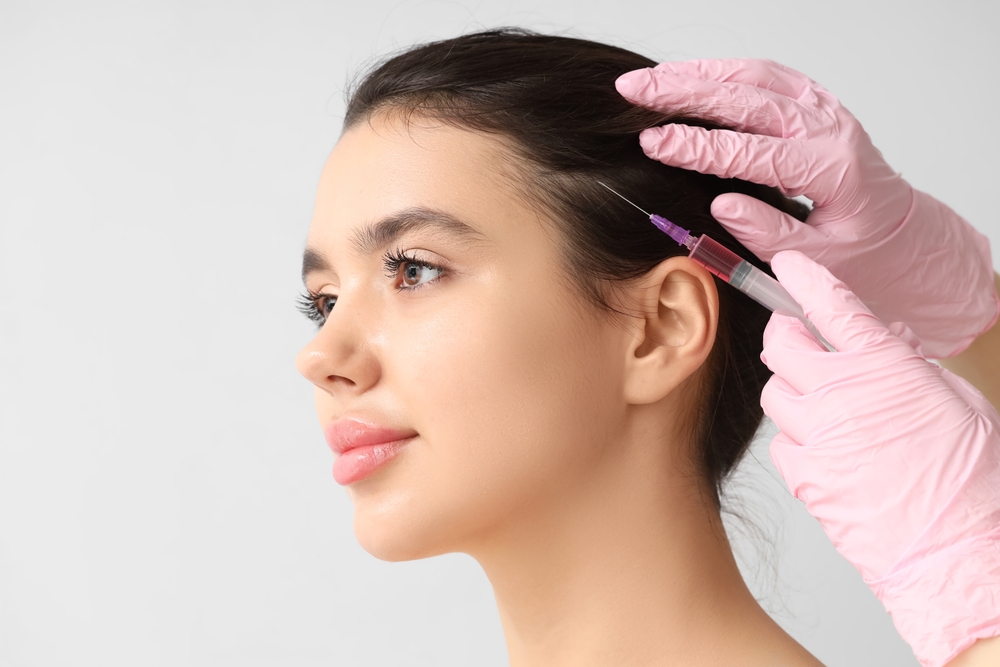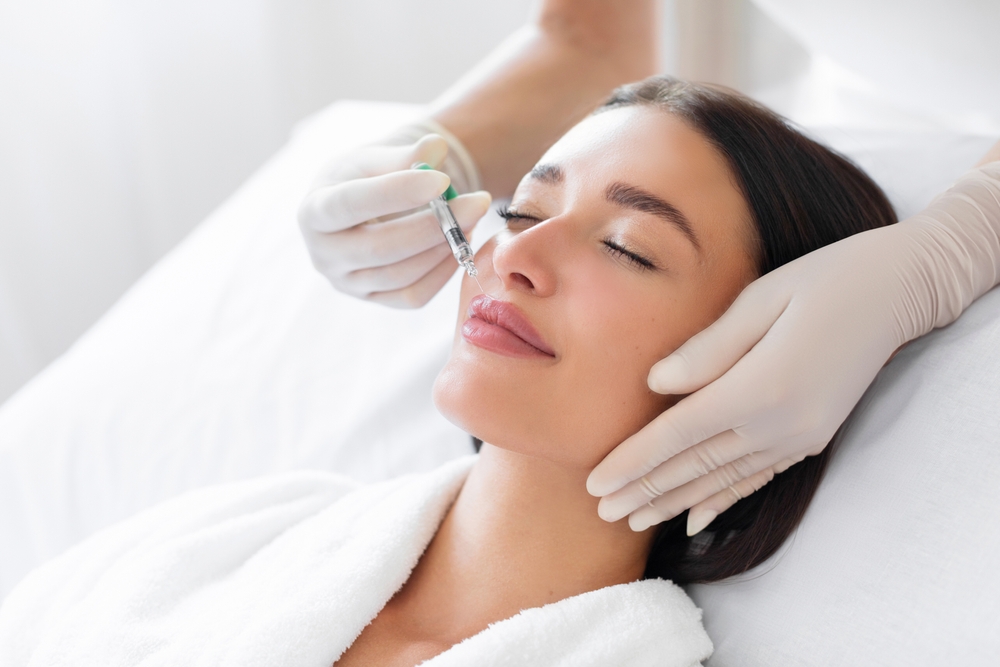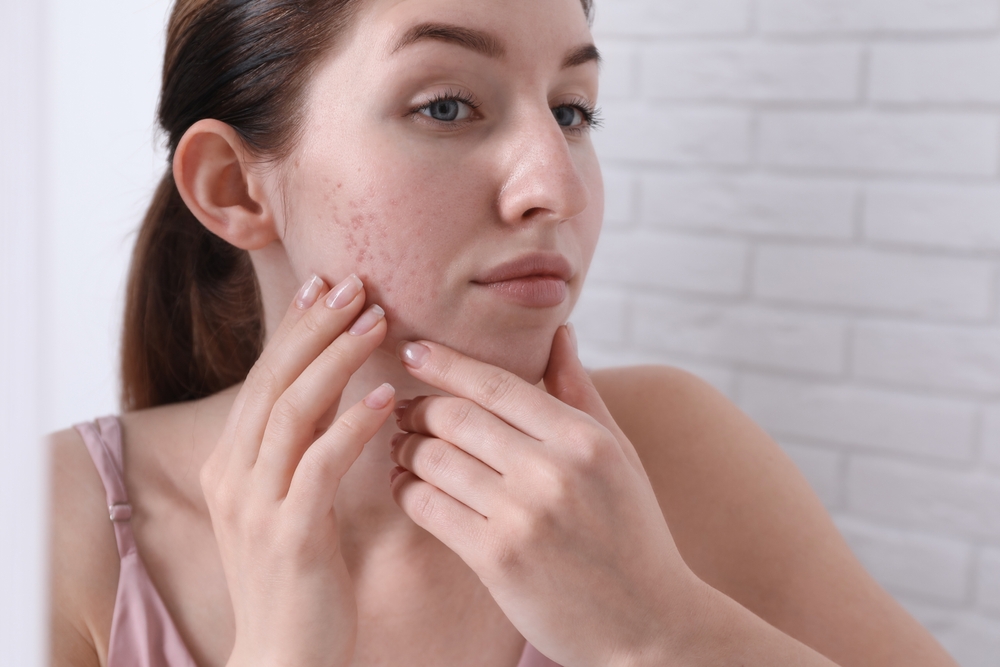
Microneedling with PRP may offer hope for persistent acne scars that haven’t responded to other treatments. In fact, studies suggest that this combination can lead to softer, more elastic tissue in some patients. This piece explores what microneedling with PRP is, how it works, and whether it might suit your skin concerns.
Understanding Stubborn Acne Scars
Acne scars represent structural changes deep within your skin, not just surface discoloration that fades over time. These permanent alterations occur in the collagen network and require targeted intervention to improve.
Why Some Acne Scars Resist Treatment
Your skin’s natural healing response determines whether acne leaves behind stubborn scars. Research reveals that inflammatory reactions in scar-prone patients last more than three weeks, while non-scar-prone individuals see inflammation resolve much faster [1]. This prolonged immune reaction has the greatest influence in outcomes.
The persistence of inflammation triggers several processes that make scars resistant to treatment:
- Deeper tissue damage: Scars form when inflammation reaches skin beneath the surface epidermis.
- Collagen network disruption: Inflammatory cells release enzymes that degrade mature collagen fibers in the dermis.
- Sebaceous gland destruction: The inflammatory process can damage or eliminate parts of the body that produce sebum, creating tissue loss that appears as depressions.
Studies show that inflammation stimulates fibroblast proliferation and production and export of proteins used by the skin. This establishes a cycle where chronic inflammation promotes fibrosis, and fibrosis prevents inflammation from dissipating [2]. The degree of inflammation relates positively to the final scar size.
The Limitations of Microneedling Alone
Microneedling creates controlled micro-injuries that trigger wound healing and collagen production in the upper dermis. The procedure keeps the epidermis largely intact and reduces risks associated with more aggressive resurfacing methods.
Clinical evidence suggests microneedling can improve atrophic scar appearance. However, recent findings indicate that combination therapies may produce better outcomes than microneedling alone [5].
The depth and complexity of stubborn acne scars often require more than surface collagen stimulation. Ice pick scars extend so deeply that conventional resurfacing approaches struggle to reach the affected tissue. Complete regeneration of the destroyed tissue is necessary to show meaningful improvement. This explains why adding biological growth factors through a PRP facial might boost the regenerative response beyond what mechanical needling achieves independently.
How PRP Enhances Microneedling Outcomes
Combining PRP with microneedling creates a biological enhancement that addresses the deeper regenerative needs of stubborn acne scars. This pairing works through distinct yet complementary pathways that may produce better outcomes than either treatment alone.
The Synergistic Mechanism Explained
The microchannels created during microneedling serve a dual purpose. These tiny perforations trigger your body’s natural wound healing response and act as delivery pathways for PRP to reach the deeper skin layers where scar remodeling occurs [4]. The active components in PRP can then penetrate areas that topical application alone cannot access.
Research suggests this combination produces marked improvements in skin appearance, with more collagen and elastic fiber deposition compared to microneedling alone [6]. The mechanical injury from needling activates one set of healing signals, while PRP introduces concentrated growth factors that magnify and direct this response toward tissue regeneration [6][4].
Platelet Growth Factors and Tissue Regeneration
PRP contains multiple growth factors released from platelet alpha granules, each contributing specific regenerative functions. Together, they promote new blood vessel formation, deliver oxygen and nutrients to healing tissue [7], stimulate epidermal cell proliferation, and accelerate restoration [7].
Other growth factors further support cellular repair and tissue reconstruction [7][8]. They work in concert to create an environment conducive to detailed skin regeneration rather than simple surface healing.
Improved Collagen and Elastin Deposition
The addition of PRP to microneedling may enhance the quality and quantity of new collagen formation. Research demonstrates that combined treatment produces collagen deposition with more ordered arrangement and uniform density compared to standard approaches [7]. This structured collagen contributes to smoother skin texture and improved scar appearance.
The dermal remodeling process benefits from this concentrated growth factor environment and potentially creates more effective tissue reconstruction in scarred areas [6][4].
Faster Recovery with Reduced Downtime
Recovery time is a practical consideration for many patients. PRP application may accelerate healing, with most individuals experiencing recovery periods of 24 to 72 hours [11][12]. Standard microneedling often requires longer healing phases.
Clinical observations indicate that PRP reduces tissue swelling and infiltration, with these improvements appearing earlier than in control subjects [10]. Patients often notice skin tone and texture improvements within 7 to 10 days, with continued enhancement over subsequent weeks as collagen rebuilding progresses [12].
A Summary of the Treatment Process
Understanding what happens when microneedling with PRP helps you prepare mentally and physically for the experience. The process unfolds in distinct stages. Each stage maximizes the benefits of microneedling with PRP for scar improvement.
Blood Draw and PRP Preparation Method
Your Beauty Vault provider draws a small blood sample before the microneedling begins. The sample is 10 to 60 milliliters from your arm [13]. The blood goes into a sterile tube containing an anticoagulant.
The preparation relies on differential centrifugation. This process separates blood components based on their weight, separating red blood cells from plasma [14]. Your Beauty Vault provider then transfers the plasma to another tube for a second spin at a higher speed that concentrates the platelets [15]. Altogether, the preparation takes roughly 30 to 45 minutes while you wait.
PRP Application
Topical application spreads the platelet-rich plasma across your skin right after microneedling. The microchannels created by needling allow absorption at rates up to 3,000 percent higher than intact skin [1]. This method feels less invasive and adds minimal discomfort to the procedure.
Session Frequency and Treatment Course
Original treatment involves a series of sessions spaced four to six weeks apart [19][20]. This interval allows sufficient healing time between treatments while maintaining continuous collagen production. Most patients undergo three to six sessions during the original phase [21].
Maintenance treatments every three to six months help preserve improvements following the original series [19][21]. Your skin needs weeks to complete the inflammatory, proliferative, and remodeling phases that rebuild tissue structure. Scheduling sessions too frequently may overwhelm your skin’s healing capacity and interfere with collagen formation.
Is This Treatment Right for You?
You need a careful evaluation of several health and skin factors to determine your suitability for microneedling with PRP. Most people qualify for this treatment, though specific conditions may prevent you from proceeding safely [28].
Ideal Candidates for Microneedling with PRP
You may benefit from this treatment if you have atrophic acne scars without active breakouts. The procedure works safely in skin tones of all types [9]. Good overall health strengthens your candidacy, especially when you have a normal immune system function and predictable skin healing.
Medical Conditions That Disqualify You
Several conditions mean you must postpone or avoid treatment. Pregnancy and breastfeeding are absolute contraindications [28]. Isotretinoin (Accutane) users must wait at least one month after their final dose [9]. Furthermore, you cannot proceed with active acne, skin infections, eczema, rosacea, or any condition that causes facial inflammation [28][9].
Blood-related concerns include bleeding disorders, anticoagulant therapy, or blood-thinning medications like warfarin or aspirin [29]. Immune system compromise from chemotherapy, radiation, or high-dose steroids rules you out [29]. A keloid history or poor wound healing patterns mean treatment isn’t right for you [9]. Skin cancer in treatment areas, recent facial radiation (within 12 months), or active autoimmune disease also rule you out [28][30].
Managing Expectations for Severe Scarring
Treatment unpredictability means there are no guaranteed outcomes [31]. Studies show 50% to 70% improvement in acne scars after multiple sessions [9], though results vary from person to person. Active acne needs resolution before scar treatment begins [31].
PRP Treatments are Available for Acne Scars at the Beauty Vault
Pairing mechanical collagen stimulation with concentrated growth factors from your own blood might enhance tissue regeneration beyond what either method achieves independently. This might do wonders for your acne scars.
However, results vary based on scar type and your individual healing response. You might also need to commit to multiple sessions to maximize the benefits. Let the Beauty Vault team in West Hollywood evaluate your condition and provide personalized treatment suggestions. To get started, call us now at (323) 800-6770 or fill out a contact form.
FAQs
Q1. How long does it take to see results from microneedling with PRP for acne scars? You may notice initial improvements in skin brightness and texture within two to six weeks after treatment. However, the most significant changes typically develop over six months as collagen production continues and tissue remodeling progresses. The most dramatic improvements often appear during sessions four through six of your treatment course.
Q2. How many sessions are needed to treat stubborn acne scars with this combination therapy? Most patients require three to six sessions spaced four to six weeks apart during the initial treatment phase. This interval allows adequate healing time between sessions while maintaining continuous collagen production. After completing the initial series, maintenance treatments every three to six months help preserve the improvements achieved.
Q3. Can you undergo microneedling with PRP if you have active acne? No, active acne is a contraindication for this treatment. You must wait until your acne breakouts have resolved before beginning scar treatment. Additionally, if you’ve recently used isotretinoin (Accutane), you need to wait at least one month after your final dose before having the procedure.
Q4. What types of acne scars respond best to microneedling with PRP? Rolling scars typically show the most improvement with this treatment, followed by boxcar scars, which demonstrate significant reduction starting from the second visit. Ice pick scars, due to their depth and narrow V-shaped structure extending deep into the dermis, tend to show more modest improvements compared to other scar types.
Q5. Is the recovery time shorter when PRP is added to microneedling? Yes, PRP application may accelerate healing, with most patients experiencing recovery periods of 24 to 72 hours. Studies show reduced redness and swelling when PRP is added to microneedling compared to microneedling alone. This is notably shorter than the recovery time for laser treatments, which can require up to two weeks.
References
[1] – https://nationallaserinstitute.com/microneedling-platelet-rich-plasma-prp-course/
[2] – https://pubmed.ncbi.nlm.nih.gov/38159109/
[3] – https://pmc.ncbi.nlm.nih.gov/articles/PMC2958495/
[4] – https://pmc.ncbi.nlm.nih.gov/articles/PMC8149985/
[5] – https://www.frontiersin.org/journals/medicine/articles/10.3389/fmed.2025.1643035/full
[6] – https://pmc.ncbi.nlm.nih.gov/articles/PMC11126223/
[7] – https://pmc.ncbi.nlm.nih.gov/articles/PMC7427034/
[9] – https://www.aad.org/public/cosmetic/scars-stretch-marks/microneedling-fade-scars
[10] – https://pmc.ncbi.nlm.nih.gov/articles/PMC7949413/
[12] – https://texasdls.com/a-complete-guide-to-prp-microneedling-recovery/
[13] – https://www.pittsburghskin.com/2019/07/platelet-rich-plasma-new-uses-in-dermatology/
[14] – https://pmc.ncbi.nlm.nih.gov/articles/PMC8664176/
[15] – https://www.sciencedirect.com/science/article/pii/S204908012201353X
[16] – https://findyourbeautiful.com/blog/microneedling-depth-acne-scars-guide/
[18] – https://pubmed.ncbi.nlm.nih.gov/40083615/
[20] – https://globyglenmd.com/optimal-microneedling-frequency-your-ultimate-guide/
[21] – https://www.eastsideeyecandy.com/how-often-should-you-get-a-microneedling-treatment/
[22] – https://www.frontiersin.org/journals/medicine/articles/10.3389/fmed.2021.788754/full
[23] – https://pmc.ncbi.nlm.nih.gov/articles/PMC4338464/
[24] – https://promdhealth.com/prp-microneedling-complete-guide/
[26] – https://www.bwaesthetics.com/how-much-does-prp-microneedling-cost-in-beverly-hills/
[27] – https://dermasurge.co.uk/laser-resurfacing-vs-microneedling-which-is-better-for-acne-scars/
[28] – https://www.healthline.com/health/beauty-skin-care/microneedling-with-prp
[29] – https://qualitycaredoc.com/microneedling-safety-tips-and-guidelines/
[30] – https://www.jaad.org/article/S0190-9622(19)32554-X/fulltext